Category: News

  • The May 2023 INESC-ID newsletter is out!

    The May 2023 INESC-ID newsletter is out!

    The May 2023 issue of NEWS-ID — the INESC-ID Newsletter — is out! You can read it here.

    Containing recent news from our researchers and their projects, open positions and some extra bits of content, our monthly newsletter is a great one-stop spot for great content on computer science and electrical and computer engineering.

    You can subscribe to our monthly newsletter here.

  • INESC-ID student Catarina Botelho wins “3 Minutos de Tese”

    INESC-ID student Catarina Botelho wins “3 Minutos de Tese”

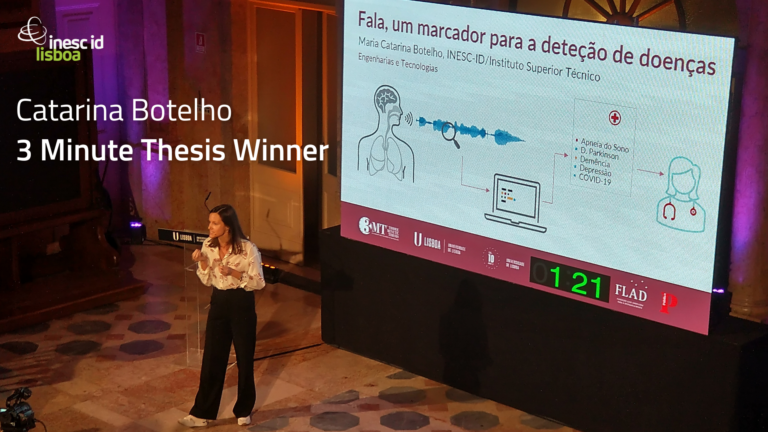
    Catarina Botelho has been crowned winner of the first ever edition of 3 Minutos de Tese at the University of Lisbon.

    A PhD student in the INESC-ID Human Language Technologies (HLT) research area and Instituto Superior Técnico (IST), Catarina won 1st place in yesterday’s live competition at Museu Nacional de História Natural e da Ciência (the National Museum of Science and Natural History) with a brilliant and effective three-minute talk covering her doctoral work on speech processing for medical diagnosis and monitoring — a talk that you can (re)watch here around minute 41.

    Having originated at the University of Queensland in 2008, the 3 Minute Thesis competition is now run in numerous universities around the world. On winning 1st place at this year’s competition, Catarina said she felt “very fulfilled and happy […]. It is truly rewarding to see my PhD work recognized in this way. I would like to express my gratitude to my advisors, as well as friends and family for the feedback they provided me throughout the presentation preparation process. I would also like to thank ULisboa, Público and FLAD for organizing this fantastic event. In fact, the jury had a difficult task, as all the presentations were of a very high level. I feel happy to have been recognized among so many brilliant projects.”

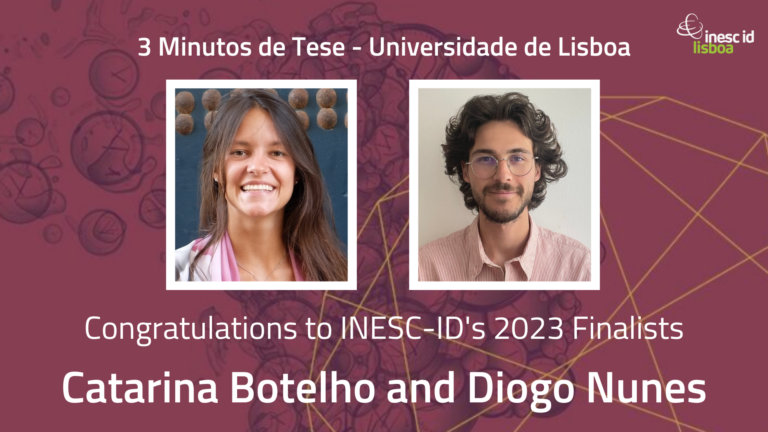
    Catarina competed with eleven other University of Lisbon doctoral students, amongst them Diogo Nunes, Catarina’s HLT colleague at INESC-ID, who delivered a superb talk on his work on chronic pain assessment from patient reports. This cohort of twelve finalists — five of whom are IST students — was chosen from 150 applications, making Catarina’s 1st place win the more extraordinary.

    Distilling years of doctoral research into a three-minute talk isn’t an easy task though. “I’d say [the most difficult part] was turning the questions into answers (and limiting the answers to just three minutes!). As we study more and more about a subject, it seems that more and more questions arise. And in this presentation, although there are many open questions in my work, I wanted to convey the main objectives and promising results that I have achieved, but also explain that there are still challenges that we are currently working on. This was a very interesting (and difficult!) exercise.”

    And what does Catarina take away from this experience? “Two main things: On the one hand, I developed the ability to reduce my work to the absolute essentials, for an audience that is not in the area. This gives me a new perspective on my own work. On the other hand, I got to know the amazing doctoral work of my colleagues, and I feel proud to belong to this community.”

    By landing 1st place, Catarina won a monetary prize of 5.000€ as well. Second place, worth 2.000€, went to Patrícia Chaves (from Faculdade de Ciências) and third place, with a cash prize of 1.000€, went to another IST student, Matteo Pisano. Prizes will the officially granted in an award ceremony on 27 June 2023 at Reitoria da Universidade de Lisboa.

    This first University of Lisbon edition of 3 Minutos de Tese was organized as a joint venture with the newspaper PÚBLICO — which has also reported on Catarina’s win — and Fundação Luso-Americana para o Desenvolvimento (FLAD).

  • Ana Teresa Freitas receives 2023-2024 Fulbright Portugal Award

    Ana Teresa Freitas receives 2023-2024 Fulbright Portugal Award

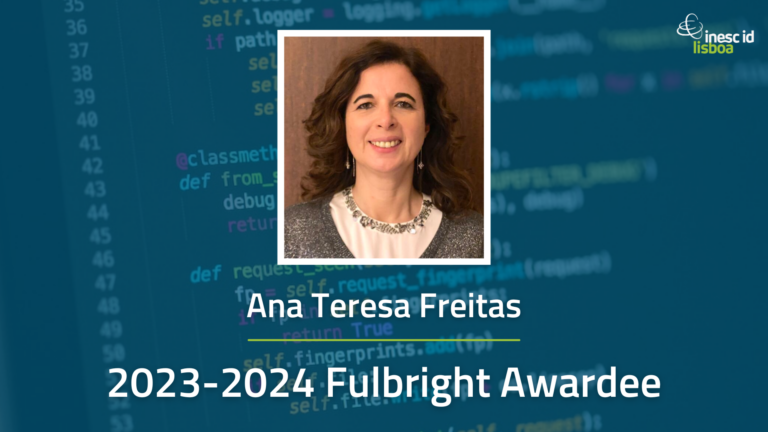
    Ana Teresa Freitas has been named one of this year’s Fulbrighters by the Fulbright Portugal Program.

    A researcher in the Information and Decision Support Systems (IDSS) INESC-ID research area, as well as strategic coordinator of the Life and Health Technology thematic line, and Full Professor at Instituto Superior Técnico, Professor Freitas is part of a select list of 35 Portuguese Fulbright awardees, and an even narrower group of only three awardees in the “Professors and Postdoctoral Researchers” category.

    Professor Freitas will use her three-month stay at the Division of Cancer Epidemiology and Genetics of the National Cancer Institute in Rockville, Washington D.C., USA, to perform further research on genomic medicine, developing “new algorithms to improve polygenic risk models, exploring deep learning techniques on datasets with hundreds of thousands of genomes.”

    Based on a diplomatic agreement signed between the Portuguese Government and the Government of the United States of America in 1960, the Fulbright Portugal Program aims to promote mutual understanding between these two countries through its mission in the areas of education and science, including its reputed offering of exchange opportunities for professors, researchers and students.

  • INESC-ID researchers @Gulbenkian: “Inteligência Artificial: Que Humanidade?”

    INESC-ID researchers @Gulbenkian: “Inteligência Artificial: Que Humanidade?”

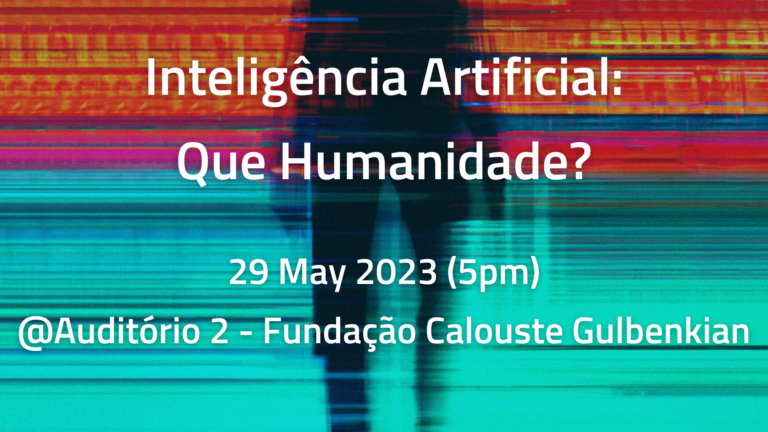
    INESC-ID researchers and Instituto Superior Técnico Professors Arlindo Oliveira and Isabel Trancoso will participate in a two-hour conference at the Gulbenkian Foundation on the topic of Artificial Intelligence (AI).

    Taking place on 29 May 2023 at 5pm, Inteligência Artificial: Que Humanidade? (“Artificial Intelligence: What Humanity?”) will gather specialists from technology and the social sciences to “explore the future of AI and its consequences for humanity, discussing recent advances, applications in various areas and the economic, social and philosophical impacts of this revolutionary technology.”

    Professors Oliveira and Trancoso are both internationally-recognized experts on AI, the former with dedicated focus on machine learning, algorithms and bioinformatics while the latter has garnered distinction with research on human language technologies, including spoken language processing.

    This event will be broadcast live by the Gulbenkian Foundation and entry to the on-site event is subject to capacity.

  • Computational biology and the future of medicine: OLISSIPO collaborates with “Isto é Matemática”

    Computational biology and the future of medicine: OLISSIPO collaborates with “Isto é Matemática”

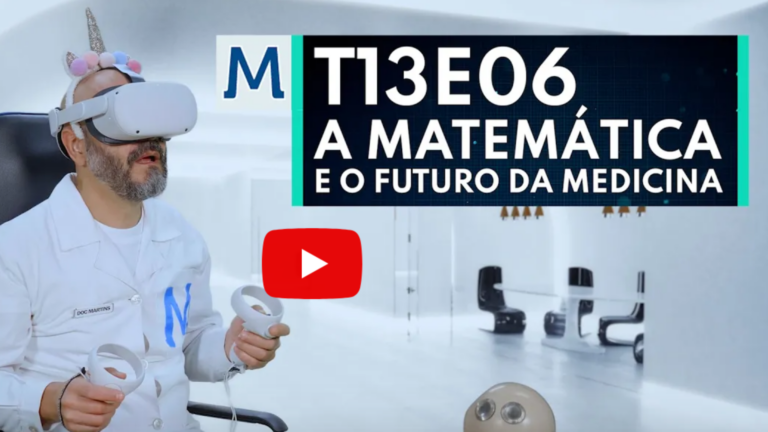
    OLISSIPO – Fostering Computational Biology Research and Innovation in Lisbon, an international Horizon 2020-funded project coordinated by INESC-ID, has recently collaborated in the production of the TV program Isto é Matemática (“This is Math”).

    In episode 6 of the currently running season of the program, the mathematician and presenter Rogério Martins visited the Taguspark campus of Instituto Superior Técnico (IST) and spoke about artificial intelligence, data science, computational biology and their potential in revolutionizing the future of diagnostic medicine.

    OLISSIPO is coordinated at INESC-ID by Susana Vinga, Information and Decision Support Systems (IDSS) researcher and Associate Professor at IST. Bringing together four reference European institutions — the European Molecular Biology Laboratory at Heidelberg, ETH Zurich, Inria and INESC-ID — OLISSIPO aims at enhancing the competences in computational biology at INESC-ID with the ultimate goal of creating an international pole of excellence in multi-disciplinary science in Portugal.

    You can watch the full episode here.

  • INESC-ID researcher Luísa Coheur recognized with Excellence in Teaching Award

    INESC-ID researcher Luísa Coheur recognized with Excellence in Teaching Award

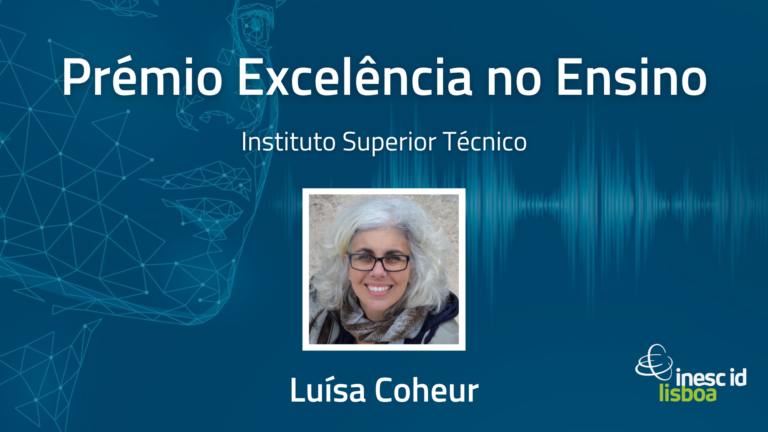
    Luísa Coheur has been recognized with an Excellence in Teaching Award by the Pedagogical Council of Instituto Superior Técnico (IST).

    An Associate Professor in the Department of Computer Science and Engineering, Professor Coheur is also a researcher within the Human Language Technologies (HLT) research area at INESC-ID, where she works on Natural Language Processing, specializing in Dialogue Systems, Question/Answering and Machine Translation. Professor Coheur’s teaching has been especially recognized for its innovative use of play in pedagogy, including the implementation of escape games.

    Professor Coheur will receive her award during Dia do Técnico 2023 on 23 May, around 10:40 am, at Salão Nobre in the Alameda campus of IST.


  • INESC-ID takes part in new Horizon Europe Project SYCLOPS

    INESC-ID takes part in new Horizon Europe Project SYCLOPS

    Eight leading European organizations join forces to bring together RISC-V and SYCL standards to demonstrate ground-breaking advances in scalability of extreme data analytics via fully-open AI acceleration.

    The wide-spread adoption of AI has resulted in a market for novel hardware accelerators that can efficiently process AI workloads. Unfortunately, all popular AI accelerators today use proprietary hardware—software stacks, leading to a monopolization of the acceleration market by a few large industry players.

    Eight leading European organizations — among them INESC-ID — have joined in an effort to break this monopoly via Horizon Europe project SYCLOPS (Scaling extreme analYtics with Cross-architecture acceleration based on Open Standards). The vision of SYCLOPS is to democratize AI acceleration using open standards, and enabling a healthy, competitive, innovation-driven ecosystem for Europe and beyond. This vision relies on the convergence of two important trends in the industry: (i) the standardization and adoption of RISC-V®, a free, open Instruction Set Architecture (ISA), for AI and analytics acceleration, and (ii) the emergence and growth of SYCL™ as a cross-vendor, cross-architecture, data parallel programming model for all types of accelerators, including RISC-V.

    The goal of project SYCLOPS is to bring together these standards for the first time in order to demonstrate ground-breaking advances in performance and scalability of extreme data analytics using a standards-based, fully-open, AI acceleration approach.

    The project kicked off its activities in January 2023 with an online meeting, where all partners took the floor to present their ambitious plans to make the project a success. SYCLOPS brings together consortium partners with expertise in several fields (computer architecture, programming languages, systems and runtimes, Big Data, High- Performance Computing) with the aim of making groundbreaking advances over state-of-the-art in AI acceleration along three axes: (i) infrastructure tools for simple, fast, cost-efficient customization of RISC-V accelerators, (ii) platform tools (compiler, runtime, interpreter) for SYCL-based cross-architecture programming, (iii) application tools (parallel algorithms, profiling and porting tools) for cross-architecture AI and analytics acceleration.

    The project will demonstrate its solutions in three use-cases, namely, Autonomous Systems, High-Energy Physics, and Precision Oncology. More broadly, the advances made by SYCLOPS will foster an open European and global ecosystem of AI acceleration solutions for scaling extreme analytics based on SYCL and RISC-V standards. SYCLOPS will reinforce European leadership in the rapidly growing AI acceleration market by bringing together key European SME partners who have played a crucial role in the formation of these standards. The experience gained in SYCLOPS will also be used to contribute back to the SYCL and RISC-V standards; bringing together the two standards enables co-design in both standards, which in turn, will enable a broader AI accelerator design space, and a richer ecosystem of solutions.

    The SYCLOPS project partners are EURECOM, INESC ID, RUPRECHT-KARLS-UNIVERSITAET HEIDELBERG, CERN, HIRO-MICRODATACENTERS, ACCELOM, CODASIP, CODEPLAY.

    For any further information, please contact us at: aleksandar.ilic[at]inesc-id.pt and leonel.sousa[at]inesc-id.pt (Local Coordinators at INESC-ID) and raja.appuswamy[at]eurecom.fr (Project Coordinator at EURECOM).

  • Two INESC-ID PhD students selected as “3 Minute Thesis” finalists

    Two INESC-ID PhD students selected as “3 Minute Thesis” finalists

    Two INESC-ID PhD students have been selected as part of the 12-strong group of finalist for the 3 Minutos de Tese (3 Minute Thesis) science communication competition.

    Catarina Botelho and Diogo Nunes — PhD students in the INESC-ID Human Language Technologies research area — will both be part of the second and last phase of this year’s competition, sharing a stage with colleagues from other University of Lisbon schools (Faculdade de Letras, Faculdade de Medicina, Instituto de Ciências Sociais, Faculdade de Farmácia and Faculdade de Letras). Instituto Superior Técnico, where Catarina and Diogo are enrolled for their doctorates, is by far the school with the largest number of finalists — 5 out of 12 — and INESC-ID the only research unit at Técnico with multiple finalists.

    Popular around the world, this particular edition of 3 Minute Thesis is organized by the University of Lisbon. It will award PhD students enrolled in their third year or up with 1st, 2nd and 3rd places and a monetary prize of 5.000,00 €, 2.000,00 € and 1.000,00 €, respectively, recognizing the best 3-minute research presentations in competition.

    As part of the award’s mission of fostering scientific culture and interdisciplinary, participants also receive complementary training in science communication.

    This year’s winners of 3 Minutos de Tese will be chosen from the 12 twelve finalists — the complete list of which you may find here — over their talks during the competition’s finale on 30 May. An award ceremony will be hosted in June (date TBD).

  • How to generate algorithms: Diogo Vaz featured in Público’s article series by PhD students

    How to generate algorithms: Diogo Vaz featured in Público’s article series by PhD students

    Diogo Vaz — a PhD student in the Distributed, Parallel and Secure Systems (DPSS) research area — has published a piece on his research work in the Portuguese newspaper Público (following Diogo Nunes’ recent piece in the same publication).

    As Diogo recounts, his “work intends to revolutionize the process of developing fault-tolerant algorithms through the implementation of a new tool that allows to generate correct and efficient algorithms automatically.” Diogo is doing this by using generative AI and reinforcement learning techniques (the first capable of generating content, such as text and images, based on specific prompts and pieces of data, and the latter a model capable of learning through trial and error), with the plan of applying this newly developed tool to solving theoretical and practical problems, such as blockchain algorithms.

    Diogo’s piece is published within the series “Conta-nos a tua ciência” (“Tell us about your science”), in which PhD students at the University of Lisbon are given an online space to share their research — as well as its importance and societal relevance — with Público readers.

    You can read Diogo’s entire piece, in Portuguese, here.

  • Girls in ICT Day 2023: GIRLSTEAM @ Taguspark

    Girls in ICT Day 2023: GIRLSTEAM @ Taguspark

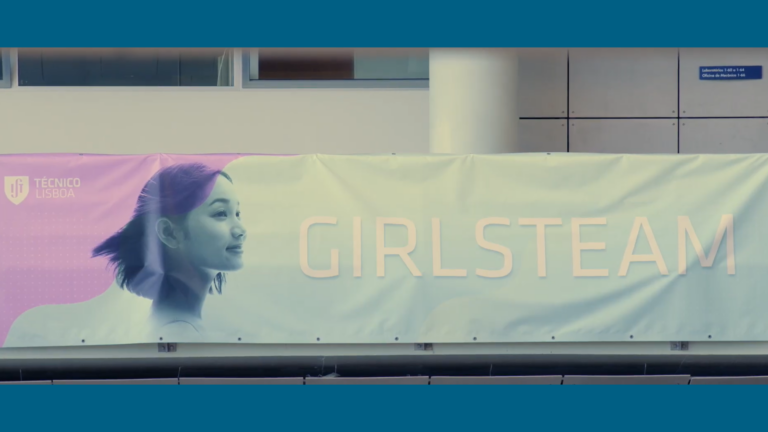
    The Instituto Superior Técnico Taguspark community recently celebrated Girls in ICT Day 2023 on 27 April with GIRLSTEAM 2023, a program of activities and demonstrations for more than 200 primary and secondary school students.

    Organized to encourage young women to train in STEAM disciplines (that is: Science, Technology, Engineering, Arts and Mathematics), this program included activities from the INESC-ID Artificial Intelligence for People and Society (AIPS) research area.

    Celebrated since 2011, Girls in ICT Day is a “global celebration [that this year] included a series of events that […] addressed different topics related to Digital Skills i.e., role models, education, mentorship, and youth participation.”

    For this year’s GIRLSTEAM event, the organizers produced the awesomely illustrative video below. Have a watch.