Category: News

  • New book “Predictive Control for Spacecraft Rendezvous”

    New book “Predictive Control for Spacecraft Rendezvous”

    “Predictive Control for Spacecraft Rendezvous” is based on the master’s thesis of Afonso Botelho, winner of the Luis Vidigal Prize, which was guided jointly by João Miranda Lemos, researcher at INESC-ID and professor at IST, and by Baltazar Parreira and Paulo Rosa of DEIMOS Engenharia. More details can be seen on the Springer page indicated above.

    This scientific monograph addresses the design of model predictive control algorithms for performing space rendezvous manoeuvres. It consolidates developments within guidance and control algorithms, with the aim of improving the efficiency, safety, and autonomy of these manoeuvres.

    The brief presents several applications of model predictive control to rendezvous manoeuvres, including Ankersen zero-order-hold particular solution1, which provides a realistic thrust profile. It offers new approaches for rendezvous manoeuvres in elliptical orbits, formulating obstacle avoidance constraints, passive safety constraints, and robustness techniques. It also compares finite-horizon and variable-horizon formulations for model predictive control in the context of performance and computational complexity.

    Predictive Control for Spacecraft Rendezvous is accessible to academics and students new to the topics of orbital rendezvous and model predictive control, but also presents compelling subject matter for researchers and professionals in the aerospace industry.


    More info at https://www.springer.com/in/book/9783030756956

  • INESC-ID researcher Luis M. Correia honored with the 2021 EurAAP Propagation Award
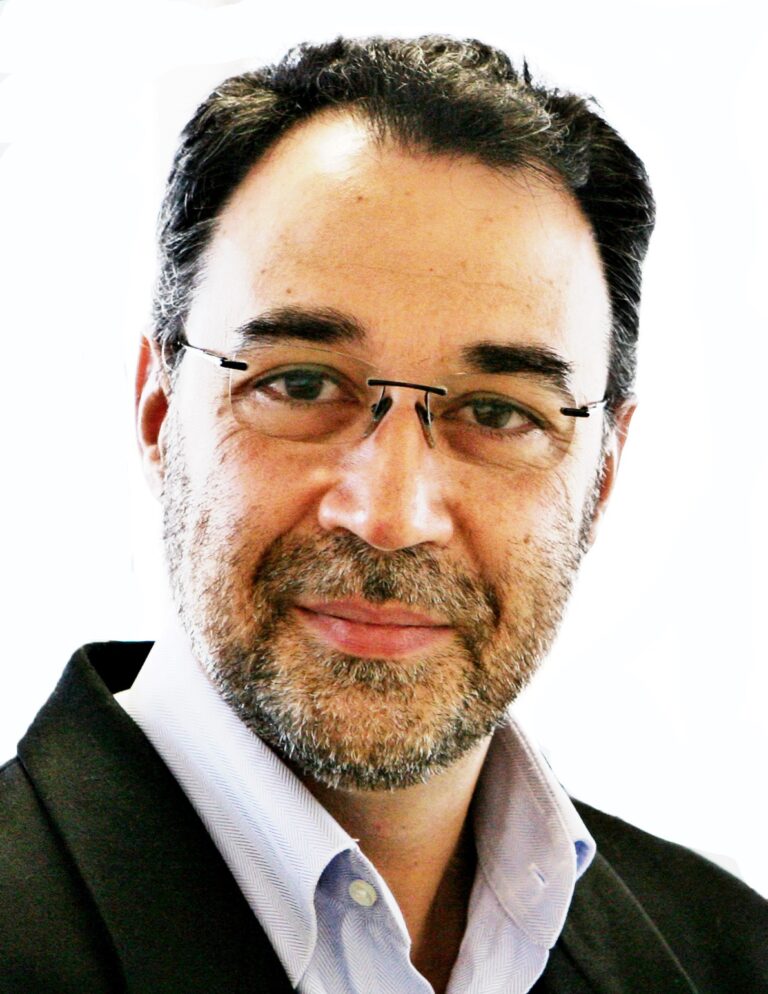
    INESC-ID researcher Luis M. Correia honored with the 2021 EurAAP Propagation Award

    The EurAAP (European Association on Antennas and Propagation) recognised Luis M. Correia with the 2021 EurAAP Propagation Award “for leadership in the field of propagation for wireless and mobile communications”

    Luis M. Correia specific area of work involves the development of models for the propagation of signals so that one can properly estimate coverage and interference, and in addition to that, the researcher ended up leading the development of projects, conferences and other activities.  One of the key areas has been the leadership in a number of international projects and working groups that resulted in models and recommendations taken by international standardisation bodies and others.

    Luis M. Correia mentioned  “It’s always a pleasure and an honour for anyone to receive a professional award, namely when it’s given by your peers, since it means recognition at the highest level.  I’ve been working in the area of mobile and wireless communications since I graduated with the Ph.D., being involved in many initiatives worldwide, namely at the European level, so receiving this international award is really a very rewarding achievement”.

    “I’ve been involved in international activities for 30 years, taking the lead in a number of projects and other initiatives, so this award means that colleagues worldwide recognised my contributions and leadership in research and development in my area of work.  From my viewpoint, leadership is about planning work in advance, listening to your colleagues and collaborators, and then taking decisions based on sound and rational arguments that are explained to all of those that are involved, so I take it that this award means that I’ve the right perspective” the researcher said.

    Luis M. Correia also emphasizes “Such an award is never a “one man show”, so I have to share it with the many colleagues, collaborators and students that have worked with me along all these years”.

    About EurAAP

    EurAAP is an international technical/scientific/educational association, with activities involving antennas and propagation applied to all areas of telecommunications.  It is one of the largest associations of its kind at the international level, having EuCAP (European Conference on Antennas and Propagation) as one of its key initiatives, with around 1 500 people attending the conference annually.  Its membership includes people from all communities working in the area, from academia to industry, encompassing students at all levels and many other engineers and technicians.

    EurAAP, the European Association on Antennas and Propagation, was created in the frame of the European Network of Excellence “ACE – Antenna Centre of Excellence”, as the point of reference of the European Antenna and Propagation scientific community.

  • Promoting circular economy in the construction sector: Técnico researchers participate in projects with a total allocation of more than 1M€

    Promoting circular economy in the construction sector: Técnico researchers participate in projects with a total allocation of more than 1M€

    CERIS leads the C+D project and participates in the CirMat project. The CircularEcoBIM project also involves CERIS researchers, as well as IN+ and INESC-ID researchers.

    Several Técnico researchers are involved in three projects aimed at promoting circular economy in the construction sector, selected by the Ministry of the Environment within the scope of the EEA Grants Environment programme. CERIS – Civil Engineering Research and Innovation for Sustainability leads the C+D project and participates in the CirMat project. The CircularEcoBIM project involves a research team from the Center for Studies in Innovation, Technology and Development Policies (IN +), the Institute for Systems and Computer Engineering, Research and Development (INESC-ID) and also from CERIS. The three projects will receive more than 1M€ in funding.

    José Dinis Silvestre, professor at the Department of Civil Engineering, Architecture and Geo-Resources (DECivil) and researcher at CERIS, leads the C+D project – “Close the loop by Disclosing the benefits of buildings’ deconstruction and materials re-use”, which received 49 thousand euros. The project includes a partnership with NORSUS (Norwegian Institute for Sustainability Research), and aims to create a web-based platform to calculate the economic and environmental benefits associated to the processes of deconstruction of buildings and of reuse of construction and demolition wastes. The Técnico team also involves the CERIS researchers Manuel Duarte Pinheiro, Vera Durão and Imtiaz Ahmed.

    Professor José Dinis Silvestre also leads the CERIS ‘participation in the CirMat project – “CIRcular aggregates for sustainable road and building MATerials”. The CERIS team also includes the researchers Jorge de Brito, Vera Durão and Bruno Nunes. The CirMat project aims to develop the industrial sector and to promote multiple products / materials with a high degree of incorporation of waste from the construction and steel industry sectors. The project is coordinated by the construction company dst s.a, and includes a partnership with University of Minho and the Norwegian University of Science and Technology (NTNU). The CirMat project received 499 thousand euros.

    The Circular EcoBIM project aims to create a BIM standard type Product Data template, i.e., a data structure for BIM objects, and a set of applications that allow the calculation of building and component circularity passports, integration and development of product EPD and the calculation of LEVEL(S) system indicators for buildings from building models, thus contributing to the implementation of circularity practices in construction. The project is coordinated by 3drivers, and involves the participation of Instituto Superior Técnico, CentralBIM, Atelier dos Remédios, PotentialSketch, VIC Properties group, and NTNU. António Aguiar Costa, professor at DECivil and researcher at CERIS, leads the Técnico’s participation in this project. The Técnico professors Amílcar Arantes, José Dinis Silvestre and Teresa Ferreira (CERIS), Paulo Ferrão (IN +) and Paulo Carreira ( INESC-ID) are also part of the team.

    Through the EEA Grants, Iceland, Liechtenstein and Norway established the objective of reducing social and economic disparities in Europe by strengthening bilateral relations with the Beneficiary States. Portugal will benefit from an amount of 102,7M€. This amount will support five programmes: Blue Growth; Environment; Conciliation and Gender Equality; Culture; Active Citizens. In addition to these five programmes, it also exists the Fund for Bilateral Relations. This fund supports initiatives aimed at strengthening the relations between Portugal and Iceland, Liechtenstein and Norway.

    Source: Técnico

  • Detecção de COVID-19 a partir de tosse e fala

    Detecção de COVID-19 a partir de tosse e fala

    Projeto de Investigação para detecção da COVID-19 a partir de tosse e fala

    E se fosse possível saber se alguém está infetado com coronavirus apenas através dos sons que produz a tossir ou ao falar?

    Graças a algoritmos de Inteligência Artificial, em breve pode tornar-se realidade. É este o objetivo do projeto “Deteção de COVID-19 a partir da tosse e fala”, desenvolvido por uma equipa de investigadores do INESC-ID e do Instituto Superior Técnico.

    A fala é produzida por órgãos partilhados com o aparelho respiratório e vários estudos têm demonstrado que é possível detectar certas patologias analisando os sons que o ser humano produz ao falar ou tossir. É com base nesta perspetiva que se dá início a esta investigação.

    Objetivo do Projeto

    Explorar a possibilidade de detectar automaticamente a COVID-19 a partir de seus efeitos na tosse e na fala.

    Para tal, é necessário recolher um extenso conjunto de dados com exemplos representativos de tosse e fala de indivíduos infectados com COVID-19 e saudáveis. A sua participação é imprescindível e muito apreciada.

    Como participar?

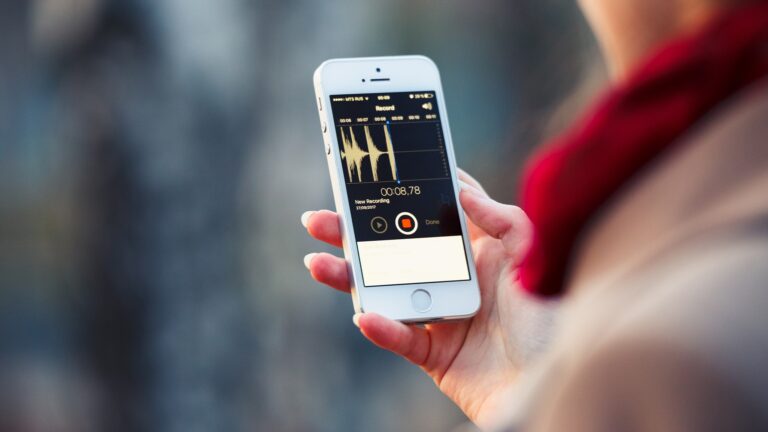
    Basta preencher um questionário que demorará aproximadamente 5 minutos. Começaremos por perguntar algumas informações demográficas e de saúde. A seguir, pedir-lhe-emos para gravar audios enquanto realiza alguns exercícios simples de fala.

    A participação é totalmente anónima e confidencial, não sendo recolhidos quaisquer contactos.

    Pode aceder também através do seguinte código QR.

    Quem pode participar?

    Qualquer pessoa. Quer já tenha sido diagnosticada com COVID-19 ou não, saudável ou com outras patologias associadas.

    A participação no estudo é gratuita e totalmente anónima e confidencial.

    Que dados são recolhidos?

    No questionário ser-lhe-ão solicitados os seguintes dados / colocadas as seguintes questões:

    • Idade
    • Sexo
    • Língua materna
    • Indicar outras condições médicas crónicas
    • Indicar se tem outra doença/condição médica que afecte a sua voz

    Depois de responder a estas questões importantes para caracterização da amostra, ser-lhe-á solicitado que grave o som da sua voz:

    • Simular tosse
    • Simular ressonar
    • Dizer a vogal “a” sustentada: “Aaaaaaaaaaa” durante o tempo que conseguir
    • Ler um texto em voz alta (fala a ler)
    • Descrever uma imagem  (fala espontânea)

    As gravações serão utilizadas para avaliar a presença de biomarcadores indicativos de COVID-19, e desenvolver sistemas robustos para detecção da doença. As suas gravações de fala e tosse serão estritamente confidenciais e serão analisadas, devidamente anonimizadas, apenas pelo grupo de investigadores deste projeto.

    Quem está de desenvolver este projeto?

    Este projeto é conduzido por uma equipa de investigadores do Instituto de Engenharia de Sistemas e Computadores – Investigação e Desenvolvimento (INESC-ID) e do Instituto Superior Técnico – Universidade de Lisboa (IST), ambos localizados em Lisboa, Portugal.

    Para saber mais:

    Website do Projeto: https://www.hlt.inesc-id.pt/w/COVID19

    Entrevista da Investigadora Isabel Trancoso ao Instituto Superior Técnico: https://tecnico.ulisboa.pt/pt/noticias/cientistas-do-tecnico-desenvolvem-projeto-para-a-detecao-de-covid-19-atraves-da-tosse-e-da-fala/

    Para qualquer esclarecimento, contacte-nos através do e-mail: covid19@hlt.inesc-id.pt

  • “Sopa para Todos” / “Soup for Everyone”: a meal waiting for those who can’t afford it

    “Sopa para Todos” / “Soup for Everyone”: a meal waiting for those who can’t afford it

    Ricardo Rodrigues, researcher at INESC-ID, is part of the group of 8 volunteers from the solidarity movement “Sopa Para Todos”, which intends to help the necessary families and, at the same time, support the restoration. It was from your hands that the website was created where the adherent requirements can be consulted in an interactive map.


    ….


    [PT]

    Ricardo Rodrigues, investigador do InescID, integra o grupo de 8 voluntários do movimento solidário “Sopa Para Todos”, que pretende ajudar as famílias necessitadas e, ao mesmo tempo, apoiar a restauração. Foi das suas mãos que nasceu o website onde podem ser consultados os estabelecimentos aderentes num mapa interativo.


    Nascido há cerca de dois meses, o movimento solidário “Sopa para Todos” pretende ajudar as famílias necessitadas e, ao mesmo tempo, apoiar a restauração. O processo tem tanto de simples como de nobre: quem quiser ajudar, basta deixar uma sopa paga num estabelecimento aderente, pessoalmente ou por MBWAY, para quem não tem possibilidade de a comprar. Apesar de recente, a iniciativa solidária tem captado atenções, ajudado muitas pessoas, e o número de restaurantes aderentes cresce de dia para dia. A equipa por detrás desta iniciativa conta apenas com 8 voluntários, um deles é o aluno de doutoramento do Técnico e investigador do INESC-ID, Ricardo Rodrigues.

    A ideia de criar o “Sopa para Todos” parte de uma amiga do investigador do INESC-ID, Ana Baião, depois de observar a alegria nos olhos de um homem a quem tinha sido oferecida uma sopa. Imediatamente, a fundadora do movimento procurou por aplicações ou projetos nacionais que lhe permitissem deixar uma sopa paga para quem precisasse. Na falta de alternativas, e ao perceber que havia muitas pessoas interessadas em ingressar num movimento com estes moldes, decidiu criar um grupo de Facebook com o objetivo de ajudar a reerguer a restauração e simultaneamente ajudar famílias com um simples ato de deixar uma sopa paga. O grupo, criado a 2 de fevereiro deste ano, já tem mais de 20 mil membros, e deu origem ao movimento que hoje faz a diferença em tantas vidas.

    Ricardo Rodrigues lembra que o seu envolvimento neste projeto surge “por sorte” e como resultado da amizade que tem com a fundadora: “ao partilhar novidades sobre o movimento, comentou comigo a falta de uma boa plataforma onde se pudesse visualizar todos os estabelecimentos aderentes”. O investigador do INESC-ID percebeu de imediato que poderia usar o seu conhecimento em informática e computação em prol desta iniciativa. Hoje é um dos voluntários do “Sopa para Todos”, e foi das suas mãos que nasceu o website onde podem ser consultados os estabelecimentos aderentes num mapa interativo. Além de Ricardo Rodrigues, há também uma alumna do Técnico que faz parte projeto e que integra a equipa do website, a engenheira Rute Lemos, e todos os interessados são bem-vindos para reforçar o grupo de trabalho.

    Ao abrir o site é reconfortante ver que o movimento solidário já se estendeu a todo o país, existindo mais de 100 restaurantes aderentes espalhados por Portugal Continental.  Ainda que a maior incidência seja em Lisboa e arredores, a iniciativa já chegou a mais de 10 distritos. Há inclusive estabelecimentos a oferecerem refeições completas, que são deixadas pagas. “Ainda temos, no entanto, muitas zonas do continente sem qualquer restaurante aderente, nomeadamente o interior do país, o norte alentejano e a zona de Trás-os-Montes. Nos Açores e Madeira já recebemos pedidos de ajuda e pessoas interessadas em ajudar, mas ainda não temos estabelecimentos aderentes. Esperamos que, com uma maior divulgação do movimento, mais restaurantes comecem a aderir e possamos ajudar mais pessoas”, refere Ricardo Rodrigues.

    Se quiser aderir à rede de estabelecimentos aderentes apenas têm que manifestar esse interesse para o e-mail  com o assunto “Registo de estabelecimento”, e rapidamente será contactado com um pedido de mais informações para que a adesão seja oficializada. Ricardo Rodrigues sugere que “o estabelecimento adira ao grupo do facebook do “Sopa para Todos” para que possa ir partilhando o seu trabalho, as suas necessidades e as suas conquistas”.

    Um movimento que não tem parado de crescer e de ajudar quem mais precisa

    A adesão ao movimento tem surpreendido a equipa “desde o primeiro dia”. “Em menos de 24h tínhamos mais de mil pessoas no grupo de Facebook e o movimento só acelerou. Nenhum membro da equipa, eu incluído, tinha experiência com uma gestão de um projeto desta escala e levou algum tempo até a equipa se adaptar”, recorda o aluno do Técnico.  “Atualmente temos 8 voluntários na administração do movimento e temos de escalar bem o esforço para que tudo funcione bem de forma a equilibrar com todo o tempo das nossas vidas familiares e profissionais”, aponta ainda.

    Ainda assim, a vontade de fazer a diferença e de ajudar, e todo o feedback recebido superam tudo isto. “Tivemos restaurantes a dizer-nos que sem o movimento já tinham fechado portas. Pessoas a agradecer porque conseguem comer”, relata Ricardo Rodrigues.  “A verdade é que o movimento só é possível porque há pessoas e estabelecimentos que querem ajudar e oferecer comida aqueles que precisam, nós apenas fazemos a ponte que permite ligar todas estas pessoas”, vinca o aluno do Técnico.

    A equipa do “Sopa para Todos” é regularmente confrontada com uma questão que tantas vezes assombra a solidariedade: “como fazem a filtragem para que apenas os que precisam recebam a ajuda?”. A resposta vem com um tom de honestidade, próprio de quem tem como foco principal ajudar: “deixamos que essa gestão e seleção seja feita pelo bom senso e pelo conhecimento das necessidades da comunidade local, bem como pelas redes de suporte dos estabelecimentos aderentes”. “A verdade vem sempre ao de cima, por isso vamos focar-nos na verdade de quem mais precisa e nas conquistas feitas neste sentido”, sublinha Ricardo Rodrigues.

    E a realidade é que há cada vez mais pessoas a precisar, e o foco deste movimento é chegar a todas elas, “principalmente aos que entraram em situações mais precárias recentemente e que ainda têm muita vergonha em pedir ajuda”, salienta Ricardo Rodrigues. “Para quebrar estas barreiras, os estabelecimentos aderentes precisam da ajuda da comunidade para sinalizar com a devida privacidade e descrição estas situações para que seja ajudado realmente quem precisa”, declara o aluno de doutoramento. “Uma coisa que, neste momento, podemos garantir, e, aí podemos dar certezas, é que já estamos a chegar a famílias que estavam realmente a precisar e saber que fazemos a diferença nesse sentido já faz tudo valer a pena”, colmata o investigador.


    Visite: https://sopaparatodos.pt/ 


    Fonte: Técnico


  • Inês Lynce is one of the scientists honored in the book “Women in Science”

    Inês Lynce is one of the scientists honored in the book “Women in Science”

    Ciência Viva launched today, March 8, International Women’s Day, the book Women in Science (“Mulheres na Ciência”) where pays tribute to Portuguese women scientists.

    The third edition of this book brought together 101 new faces and testimonies of women who work in research in our country, photos captured by Clara Azevedo, José Carlos Carvalho, Luís Filipe Catarino and Rita Carmo.

    The first edition was launched in 2016 and the second in 2019. In each edition, more than a hundred women are honored, whose work has been fundamental to Science and Technology’s progress in Portugal in recent decades.

    Inês Lynce, President of INESC-ID, is one of the ten women in Engineering who are presented in this 2021 edition.

    “It is a great honor for me to be selected to be part of this initiative, which, on the one hand, extols the importance of science and technological development and, on the other hand, lives up to the role of women in this area where they are underrepresented. I am happy to be an example that can inspire young Portuguese girls to follow their path in this area. I am a woman and I am a computer engineer” said Inês Lynce about her participation in this book.

    On the page dedicated to Inês Lynce in the book we can read:

    ” Solving problems is a fascinating challenge for me. I found in Computer Engineering a powerful and automatic approach to solving problems. Artificial intelligence added a creative and scientific way of putting a machine to work rationally. Research gave me the opportunity to come up with seas never sailed before. Teaching and mentoring students brought me the unique possibility of enhancing the ability and talent of the youngest. ” (Mulheres na Ciência, Ciência Viva, 2021)

    [pt] “Resolver problemas é para mim um desafio fascinante. Encontrei na Engenharia Informática uma abordagem poderosa e automática para resolver problemas. A inteligência artificial acrescentou uma forma criativa e científica de colocar uma máquina a atuar racionalmente. A investigação deu-me a oportunidade de chegar a mares nunca de antes navegados. O ensino e orientação de alunos trouxeram-me a possibilidade única de potenciar a capacidade e o talento dos mais jovens.” (Mulheres na Ciência, Ciência Viva, 2021)

    Fotografia: Luís Filipe Catarino


    See all the participants at https://www.cienciaviva.pt/mulheresnaciencia/terceira-edicao

  • EPEEC Partners BSC and INESC-ID Improve Multi-Device Performance of OmpSs2@OpenACC

    EPEEC Partners BSC and INESC-ID Improve Multi-Device Performance of OmpSs2@OpenACC

    In the context of the EPEEC project, a research team from the Barcelona Supercomputer Center (BSC) has developed in close collaboration with a team from INESC-ID a new programming tool that significantly eases the development of programs running on multi-GPU (Graphics Processing Unit) systems. By simply adding OpenACC directives, tasks are dynamically assigned to different GPUs by the BSC’s runtime system, while minimizing data transfers between devices.


    More info at the project website: https://epeec-project.eu/media/news/epeec-partners-bsc-and-inesc-id-improve-multi-device-performance-ompss2openacc

  • INESC-ID renews the FCT Associate Laboratory Statute

    INESC-ID renews the FCT Associate Laboratory Statute

    INESC-ID renews its Associate Laboratory Status for a period of 10 years. A recognition of the quality of the work developed and the rigor and excellence of the institution.

    On February 24th 2021, the Foundation for Science and Technology (Fundação para a Ciência e Tecnologia – FCT) presented the provisional results of the Contest for the Attribution of Associated Laboratory Status (LA), in which 40 institutions or consortia of institutions were approved for attribution of the Associated Laboratory Status.

    This assignment aims to encourage the aggregation and organization of human and material resources with the quality and dimension necessary to meet the specific objectives of national scientific and technological policy in R&D institutions or consortia of R&D institutions.

    “With the renewal of the FCT Associate Laboratory Statute, INESC-ID sees its work recognized and the possibility of a path that we want to be of ever greater quality, prestige and excellence, not only at the national level, but also at European and world level”, says Inês Lynce, President of INESC-ID.

    INESC-ID has the status of “Laboratório Associado” from FCT since December 2004.

    LA are structural components of the National Scientific and Technological System and consist of research and development (R&D) institutions or consortia of R&D institutions that make explicit institutional commitments to pursue national scientific and technological policy objectives. To this end, these laboratories must have a dimension of human resources and scientific infrastructure that allows them to sustainably promote scientific and technical careers for doctorates.

    By major scientific areas, LA are distributed as follows: Life and Health Sciences: 6; Exact and Engineering Sciences: 18; Natural and Environmental Sciences: 12, Social Sciences and Humanities: 4.

    FCT points out that of the 40 LA coordinators, 13 are women (33%) and we can proudly say that INESC-ID is one of them.

    The results of the evaluation can be consulted at: https://www.fct.pt/apoios/unidades/laboratoriosassociados.phtml.pt

  • INESC-ID Awards 2020

    INESC-ID Awards 2020

    The INESC-ID Awards 2020 symbolic ceremony  took place on February 23, during the 20th Scientific Council Plenary Meeting, an entirely online event.

    Miguel Pupo Correia, Rui Henriques and Miguel Terra Neves were the big winners, who saw their work recognized.

    Winners 2020

    - Researcher: Miguel Nuno Dias Alves Pupo Correia

    - Young Researcher:  Rui Miguel Carrasqueiro Henriques

    - PhD student: Miguel Ângelo da Terra Neves


    The nominees for 2020 awards were:

    Researcher: Joaquim Armando Pires Jorge
    Luís Eduardo Teixeira Rodrigues
    Miguel Nuno Dias Alves Pupo Correia
    Young Researcher: Rui Miguel Carrasqueiro Henriques
    Shady Alaaeldin Mohamed AbdelKader Rabie Issa
    PhD Student: Filipa Isabel Nogueira Correia
    Miguel Ângelo Terra Neves

    About the INESC-ID Awards

    The INESC-ID Awards were created in 2009. These awards are annually given, usually at the annual general institutional kick-off meeting. The juri is composed by the Advisory Board members, an independent committee made of world class experts.

    The existence of awards for the best researchers has a high importance and value for the institution. It is a contribution to strengthen the scientific prestige and social intervention of INESC-ID in its scientific environment.

    The established categories are:
    - Researcher

    - Young Researcher

    -PhD student


    See all the nominees and winners at https://inesc-id.pt/news-events/awards/

  • Professor Moisés Piedade is honored by INESC-ID with the title of Emeritus Researcher

    Professor Moisés Piedade is honored by INESC-ID with the title of Emeritus Researcher

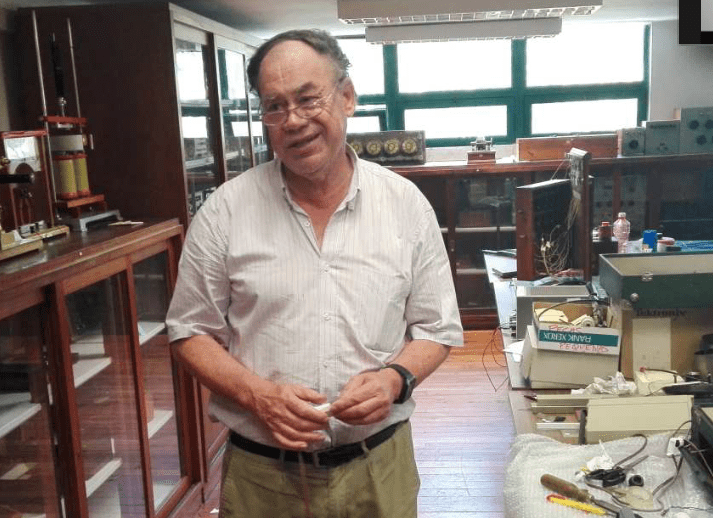
    Today, February 23th, INESC-ID, within the scope of its 20th Scientific Council Plenary Meeting, awarded the title of Emeritus Researcher to Professor Moisés Piedade.


    A recognition and tribute for his work and the dedication of a lifetime to Teaching, Researching and his contribution to Electrical Engineering


    As mentioned by Leonel Sousa during the tribute “We need teachers with the ability of Professor Moisés Piedade to do and to teach how to do. Even today, as always, it is much easier to find him in the laboratory than in his office. He spends most of his time restoring and repairing electronic equipment in the Faraday Museum. It’s not a hobby, it’s a lifetime passion for experimention and implemention.”