An EuroHPC Joint Undertaking project has been recently approved. This project was highly ranked among all submitted projects to the 1st EuroHPC call.
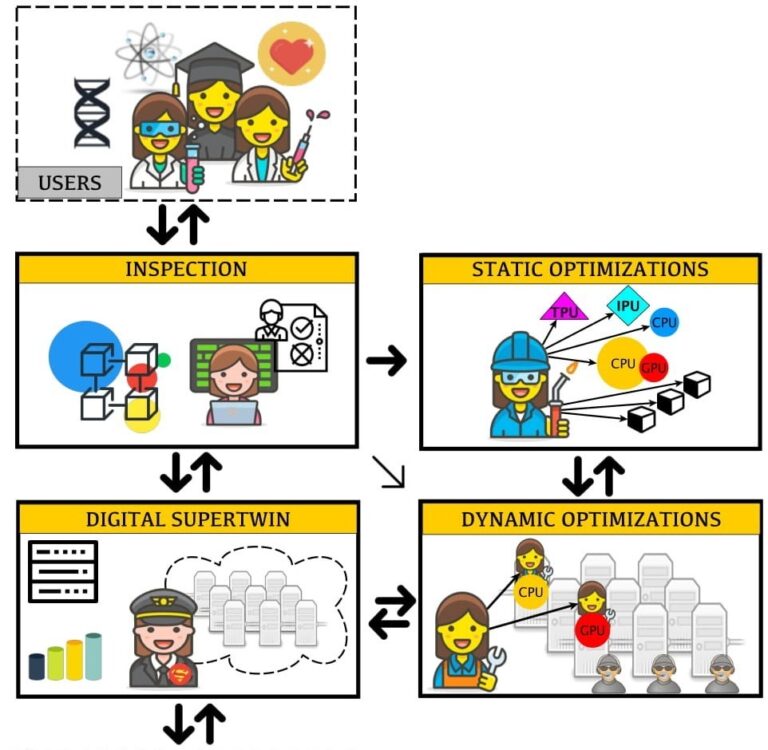
The SparCity project aims at creating a supercomputing framework that will provide efficient algorithms and coherent tools specifically designed for maximising the performance and energy efficiency of sparse computations on emerging HPC systems, while also opening up new usage areas for sparse computations in data analytics and deep learning.
To demonstrate the effectiveness, societal impact, and usability of the framework, the SparCity project will enhance the computing scale and energy efficiency of four challenging real-life applications that come from drastically different domains, namely, computational cardiology, social networks, bioinformatics and autonomous driving. By targeting this collection of challenging applications, SparCity will develop world-class, extreme scale and energy-efficient HPC technologies.
This research project is coordinated at INESC-ID by Leonel Sousa and Aleksandar Ilic, and involves partnerships with Sabanci Universitesi (Turkey), Simula Research Laboratory (Norway), Ludwig-Maximilians-Universitaet Muenchen (Germany), Graphcore AS (Norway). The general coordinator of this project is the KOC University (Turkey).
SparCity major goal is to build a sustainable exascale ecosystem and increasing Europe’s competitiveness.
Leonel Sousa was invited by IEEE (Institute of Electrical and Electronics Engineers) to present a webinar entitled “Unconventional Computer Arithmetic for Emerging Applications and Technologies”.
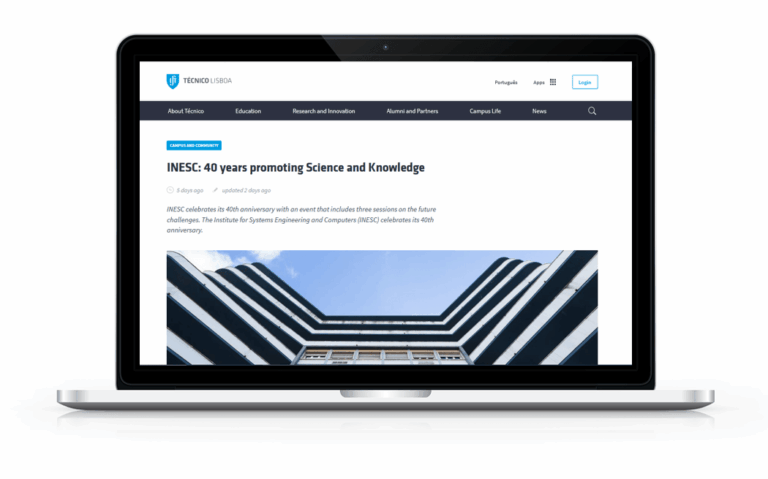
Instituto Superior Técnico went back to 1978 to celebrate INESC’s 40th anniversary.
The article recently published “INESC: 40 years promoting Science and Knowledge”, also includes the testimonials of Professor José Tribolet, founder and President of the Institution, Professor Inês Lynce, President of INESC-ID, Engº Fernando Moreira, President of INESC Innovation and Professor Susana Freitas, co-director of INESC MN.
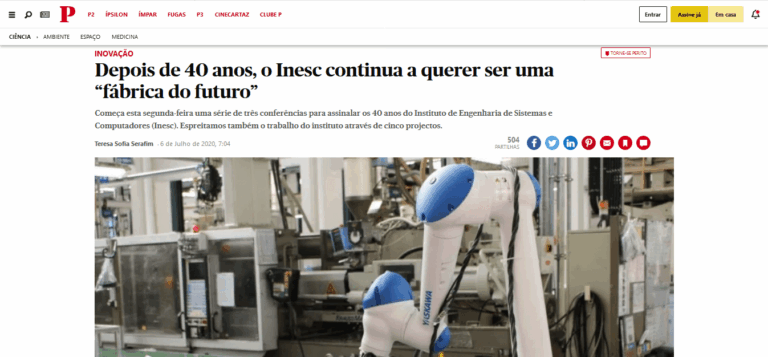
Público newspaper highlighted INESC’s 40th anniversary covering the last 40 years of the Institution. Thisarticlealso emphasises five projects developed at INESC’s research units.
The project coordinated by INESC-ID’s researcher Arlindo Oliveira is one of the projects approved under FCT call “RESEARCH 4 COVID19” .
The INTAKE project will integrate mobile location data to improve existing models for the geographical spread of COVID-19.
The integration of this information will use mobility indexes and machine learning methods that model the strength of interconnections between municipalities. The improved model will enable a smarter and more detailed monitoring of the pandemic.
CERENA, LarSys, INSA and a telecommunications operator are also involved in this project, which has already started and will present results within the next months.
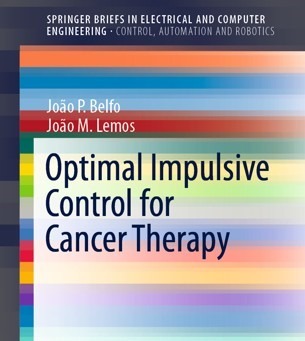
Springer recently published the book “Optimal Impulsive Control for Cancer Therapy “, written by João Pedro Belfo and João Miranda Lemos.
The book approaches the optimization of cancer therapies based on optimal impulsive control.
Three researchers from INESC-ID were recognized in the 6th edition of the annual ranking for the world’s best scientists in Computer Science and Electronics, released by Guide2Research.
The researcher’s Ana Paiva, Joaquim Jorge, and Luís Rodrigues were distinguished together with thirteen Portuguese scientists.
This ranking from Guide2Research has the goal to inspire researchers, entrepreneurs, and decision-makers around the world to explore where leading experts are heading and also provide an opportunity for all of us to know the principal experts in diverse research areas, different countries, and research institutions.
Researcher Ana Paiva was recently selected as Radcliffe Fellow for 2020-2021. The Radcliffe Institute Fellowship Program selects and supports, each year, scholars, artists, and scientists from different countries who “have both exceptional promise and have demonstrated accomplishments.”