Category: News

  • INESC-ID and CMU team up to advance Conversational AI
    INESC-ID and CMU team up to advance Conversational AI

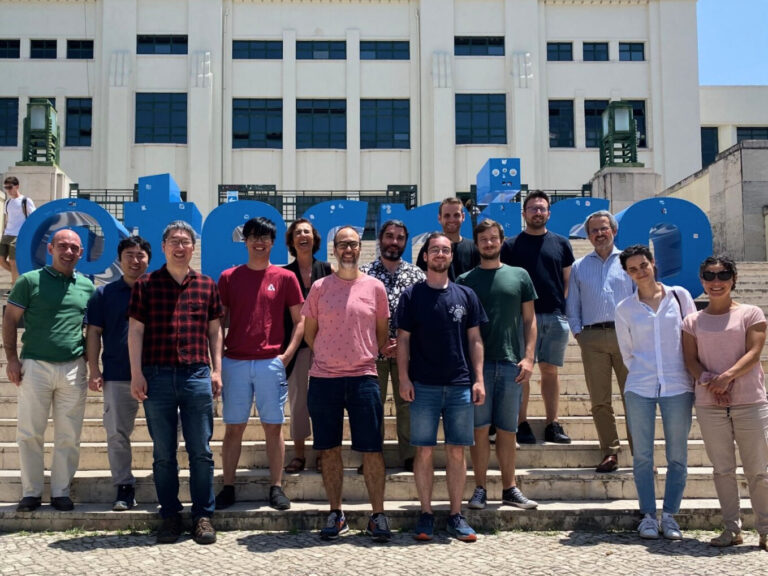
    With the goal of launching a new research collaboration, for the development of Adaptive Conversational Engines, a research team led by Shinji Watanabe, Associate Professor at the Language Technologies Institute (CMU) traveled to Lisbon from June 15 to 18. This falls under the scope of the CMU Portugal supported project, “ACE-FM: Adaptive Conversational Engine powered by Foundation Models”, “which aims to enhance the capability of speech foundation models to understand long-form, multi-party conversations toward conversational AI. Besides, it supports the collaboration between CMU and PRR Mobilizing Agenda Accelerat.AI, led at INESC-ID by Human Language Technologies researcher Alberto Abad, Associate Professor at Instituto Superior Técnico (Técnico).”

    As part of the visit, INESC-ID hosted an intensive two-day workshop, kicking off the collaboration while exchanging knowledge between teams. The workshop featured presentations from both teams and a keynote by Shinji Watanabe, titled “Open Whisper-Style Speech Models: Transparency, Scalability, and Advancing Explainability”. The  first day provided an overview of the models developed at CMU, whilehands-on tutorials by CMU students Masao Someki, MLT student, and William Chen, PhD student, empowered researchers based in Portugal to apply them effectively. The second day focused on practical sessions in model fine-tuning with custom data and introduction to ESPnet3, CMU’s next-generation speech modeling platform. of what was a very productive workshop.

    Along with fellow INESC-ID Human Language Technologies researcher, Isabel Trancoso, Alberto Abad shared insights into their team structure and highlighted successful past collaborations within the CMU Portugal program. According to project leads Aberto Abad and Shinji Watanabe, the visit helped both teams to gain a deeper understanding of each other’s expertise, research styles and focus areas, and also strengthen connections with fellow language technologies’ researchers.

    Both teams expect that this collaboration will lay the foundation for future projects and long-term academic exchanges.  “The outcomes of this collaboration will benefit not only the Accelerat.ai project, but also other PRR-supported initiatives, including the development of a national Portuguese large language model”, shared Alberto Abad.

    The 2024 CMU Portugal PRR Call for Collaborative Research Grants aims to strengthen collaboration between CMU and Portuguese research institutions aligned with the Portuguese Recovery and Resilience Plan (PRR) Mobilizing Agendas. The call funded 12 projects, representing a significant step in fostering impactful research between Portugal and CMU.

    Read the full original article here

  • Rui Henriques honoured with Universidade de Lisboa/Caixa Geral de Depósitos Scientific Award 2025

    Rui Henriques honoured with Universidade de Lisboa/Caixa Geral de Depósitos Scientific Award 2025

    The results for the Universidade de Lisboa/Caixa Geral de Depósitos Scientific Awards were recently announced, and INESC-ID’s Rui Henriques was among the awardees! The Information and Decision for Support Systems researcher, and Instituto Superior Técnico Professor, was recognised for his contributions in the field of Computer Science and Engineering, being one of 20 researchers awarded in their respective fields.

    The award ceremony will take place today, June 25, 2025, at 17:30, at the Congress Center of the Pavilion of Portugal, as part of the University of Lisbon’s Scientific Days.

    The UL/CGD Scientific Awards and Honourable Mentions were established in 2016 to recognise researchers from the Universidade de Lisboa, celebrating their contributions and encouraging publication in renowned international journals. Each award includes an incentive worth 6500 euros, as a manner of institutional recognition for the winner’s contribution to their respective scientific area.

  • New INESC-ID projects approved in FCT Call for SR&TD Projects in all Scientific Domains 2023

    New INESC-ID projects approved in FCT Call for SR&TD Projects in all Scientific Domains 2023

    Recently, seven INESC-ID projects were approved by the Foundation for Science and Technology (FCT) in the Call for SR&TD Projects in all Scientific Domains 2023. The call will support internationally recognised scientific research and technological development (SR&TD) projects, in all scientific domains, aiming to contribute to innovative processes, with market purpose, and increase knowledge creation to respond to business and societal challenges.

    It was launched in conjunction with Innovation and Digital Transition Programme – COMPETE 2030 and the Regional Programmes of the North, Centre, Lisbon, Alentejo and Algarve, and the projects may be promoted in the form of individual projects or in co-promotion, with a maximum duration of 36 months and with a maximum eligible investment of € 250,000.

    INESC-ID had the following projects approved:

    Serverless High-density Environment for eLastic cLouds
    PI: Rodrigo Bruno
    Cloud computing is currently in an impasse. While hardware efficiency is improving at an exponentially lower rate, the demand for elastic and scalable cloud resources keeps growing, as evidenced by the emergence of popular cloud computing models such as Serverless. This demand cannot be met with existing virtualization technology, and to tackle this challenge, the project will propose Shell, a new virtualized runtime environment that has the potential to unlock the new cloud era.

    VERSACOMP: VERSAtile COMPuting with Advanced Processor Architectures
    PI: Ricardo Nobre
    The advent of processors with Artificial Intelligence (AI) capabilities represents a significant leap forward. This project aims at redefining the boundaries of what is possible with general-purpose computing. Unlocking the full capabilities of modern heterogeneous systems with AI-enhanced processors for a broader range of computational tasks can result in substantial improvements in performance, energy efficiency, and cost-effectiveness.

    GLOG: A shared log for building distributed applications
    PI: Luís Rodrigues
    This project aims at designing and implementing a highly efficient distributed shared log, a data structure that allows the view of events occurring in a distributed system, named Global LOG (GLOG). It will combine features of classical logs with features of publish-subscribe systems, in a unique combination of flexibility and global consistency, able to support for geo-distributed operation, subscribers with different consistency requierements and clients concerned with a subset of the information in the log.

    SYNTHESIS: Mosaic interaction and synthetic generation of multi-omics data for the discovery of precision medicines for cancer
    PI: Emanuel Gonçalves
    Despite remarkable progress in cancer precision medicine, drug resistance and low success rates underscore the urgent need for data-driven clinical trial designs. SYNTHESIS uses generative deep learning to integrate multi-omic data from pre- and clinical cancer databases, generating synthetic tumor profiles. This will aid the identification of druggable breast cancer subtypes and their molecular signatures, ultimately boosting clinical trials.

    SafeIaC: Reliable Analysis and Automated Repair for Infrastructure as Code
    PI: João Ferreira
    Software systems are foundational to the functioning of critical infrastructure, but errors in specific pieces of their code are a significant source of system failures and degradation, compromising the stability and reliability of essential services. In collaboration with INESC-TEC, SafelaC aims to develop methodologies for the reliable analysis and automated repair of software configuration and infrastructure code, contributing to a more resilient digital infrastructure. In the end, it has the potential of benefiting industries and end-users alike by enhancing the stability and security of critical services.

    SWATE: Socially-Aware AI for Teamwork Enhancement and Training
    PI: Joana Campos
    Assessing embodied interactions in physical environments over time can provide valuable insights of team dynamics. SWATE explores the creation of a Socially-Aware AI agent to enhance team training by providing real-time insights and actionable feedback from 3D articulated bodies and audio signals, as descriptors of teamwork dynamics. SWATE promises to revolutionize team dynamics understanding and applications across various domains.

    Configurable Neural Processing Unit for Embedded Intelligence
    PI: Mário Véstias
    The goal of the project is to prototype a configurable neural processing unit for embedded AI inference and training. The expected results include a configurable Neural Processing Unit and a hardware-oriented model design framework for embedded AI. The novel Neural Processing Unit will contribute to embedded AI expansion by improving computing and energy efficiency and allowing the adaptation of the architecture to the heterogeneity of the models.

    More information about the Call (in Portuguese) here

  • “Thinking machines are a promise or a threat?”: A presentation at the Lisbon Book Fair

    “Thinking machines are a promise or a threat?”: A presentation at the Lisbon Book Fair

    Last Sunday, June 8, INESC-ID brought AI into the spotlight at the Feira do Livro Lisboa 2025 (Lisbon Book Fair 2025) as researcher Arlindo Oliveira presented his book, “Generative Artificial Intelligence”, at the Fundação Francisco Manuel dos Santos stage. The presentation, in a roundtable format, featured insights from fellow INESC-ID researcher Luísa Coheur and Instituto de Telecomunicações researcher Mário Figueiredo.

    Throughout the one-hour talk, the three researchers delved into the definition of Generative Artificial Intelligence, its potential risks regarding privacy, security, and the spread of misinformation, and the many questions it raises. They reflected on whether AI could one day experience emotions, delve into creativity and reasoning, develop a conscience, and what ethical and philosophical challenges might arise if it does. As it is stated in the book’s synopsis: “Will machines one day have rights and obligations like the rest of us? It’s worth thinking about.”

    Generative Artificial Intelligence is a technology built on several decades of research in the area of automatic learning and has captured attention since the launch of ChatGPT. The interest, however, now extends beyond the research community. The book, which followed an essay on the topic and an invitation from Fundação Francisco Manuel dos Santos, aims to address this matter, presenting and contextualising artificial intelligence, the methodologies within, and its applications and potential risks, in a way that’s accessible to a general audience.

  • To Infinite Possibilities and Beyond Publications: Patents, Startups, and Career Paths for PhDs

    To Infinite Possibilities and Beyond Publications: Patents, Startups, and Career Paths for PhDs

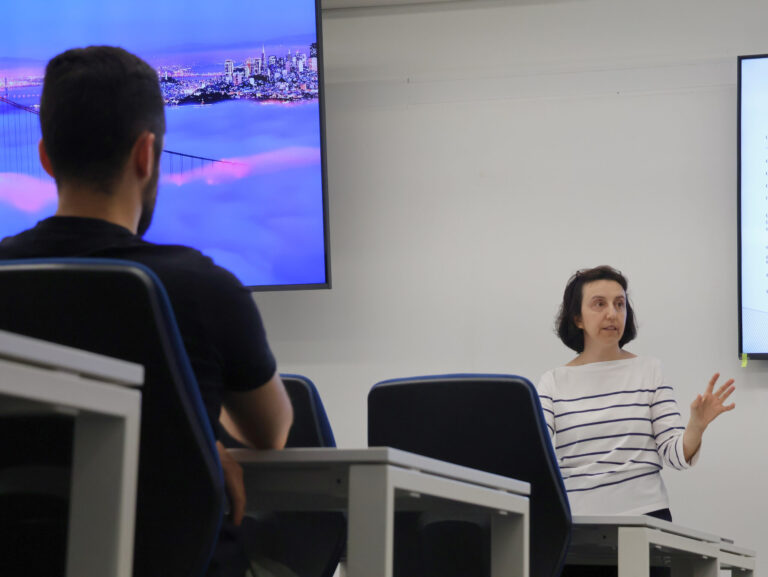
    On May 19, a group of PhD students gathered for their 8th INESC-ID PhD Students Meetup and were introduced to Sandra Aresta, Knowledge Transfer Manager at INESC-ID, who presented the topic “Beyond Publications: Patents, Spin-offs, and Alternative Paths for PhDs”. During the session, Sandra shared her personal journey and professional experience, offering insights into what it means to work in the field of technology transfer. She then explained the processes within INESC-ID and how PhD students can benefit from this field, including filing patents or even founding a startup.

    After an hour and a half of absorbing what was brand-new information for some of the participants, the questions kept coming. What followed was a lively coffee break with even more questions for the speaker, and animated discussions between the students themselves, as their conversations remained focused on how their research could lead to broader impact beyond academia.

    The PhD journey can be challenging, and concerns about the future can be a significant source of anxiety for many students. With career-oriented meetups like this, the Communications and Outreach Office at INESC-ID aims to give PhD students an overview of the diverse opportunities beyond academia and strengthen their CVs, while also building a sense of community.

    Images | © 2025 INESC-ID

  • In the Media: Research with societal impact – INESC-ID featured on CNN Inovação

    In the Media: Research with societal impact – INESC-ID featured on CNN Inovação

    “If someone had told me, when I started, that this would be the future, I wouldn’t have easily believed it”, reflects Inês Lynce at the opening of this week’s CNN Inovação –  a sentiment that captures how far INESC-ID has come. 

    INESC-ID was featured in this week’s episode, broadcast on CNN Portugal, a programme that explores innovative science, technologies and ideas that are shaping the future. The episode offers viewers an inside look into INESC-ID and its efforts to drive societal impact through research.

    Inês Lynce, President of the Board of Directors, opens the episode with an overview of INESC-ID’s mission, vision, and research focus. Researcher Rui Prada then presents All Sustainable: a digital serious game that empowers citizens with intellectual disabilities to engage with sustainability issues,  and that “It’s also a social inclusion tool for a population often excluded from the discussion,” he explains. Finally, researcher Hugo Morais introduces EV4EU, a European project led by INESC-ID that is advancing the electric mobility revolution and, as he notes, “a critical factor for achieving the objectives of Europe’s governments concerning carbon neutrality.”

    This feature provides a glimpse into how INESC-ID’s research is shaping a more digital, inclusive, and sustainable society – and a broader reflection on the role of engineering and technology in addressing global challenges. 

    Watch the full CNN Inovação episode on our Youtube channel: here

    (CNN Inovação is produced by Bubble Creative Studio. This episode was developed in collaboration with INESC-ID)

    Images | © 2025 INESC-ID and Bubble Creative Studio

  • Call for Expressions of Interest: MSCA Postdoctoral Fellowships 2025 at INESC-ID

    Call for Expressions of Interest: MSCA Postdoctoral Fellowships 2025 at INESC-ID

    INESC ID is currently inviting Expressions of Interest from researchers interested in applying for the Marie Skłodowska-Curie Actions Postdoctoral Fellowships (MSCA PF 2025), with INESC-ID as their host institution.

    We welcome highly motivated postdoctoral candidates of any nationality interested in developing cutting-edge research in one of our scientific areas.

    The MSCA PF program offers competitive funding for 12–24 months, salary, mobility, and family allowances. Fellows will benefit from INESC-ID’s dynamic research environment, experienced supervision, and a strong international collaboration network.

    Candidates must meet the following eligibility criteria of the call, including:

    • hold a PhD degree on the closing date for applications. Applicants who have successfully defended their doctoral thesis but who have not yet formally been awarded the doctoral degree are also eligible to apply
    • have a maximum of eight years of experience in research from the date of the award of the PhD degree
    • comply with mobility rules: they must not have resided or carried out their main activity (work, studies, etc.) in the country of the beneficiary (in this case, Portugal) for more than 12 months in the 36 months immediately before the call deadline

    Full conditions are published at the announcement of the MSCA PF 2025 Call.

    To express your interest, please send the following documents by June 30th to this e-mail (silvia.castro@inesc-id.pt):

    • A short CV (max 2 pages)
    • A brief outline of your research proposal (max 1 page)
    • Preferred Thematic Line/Scientific area or potential supervisor at INESC-ID

    We encourage prospective candidates to get in touch as early as possible to ensure adequate time for proposal development and support. For any questions, please contact us at silvia.castro@inesc-id.pt

  • Getting ready for the quantum era. INESC-ID joins European effort to strengthen cybersecurity and quantum resilience

    Getting ready for the quantum era. INESC-ID joins European effort to strengthen cybersecurity and quantum resilience

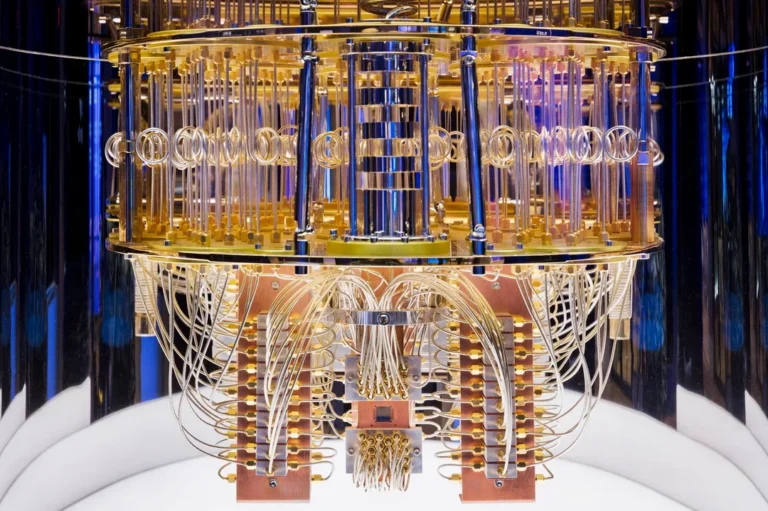
    Quantum computing is a serious threat to today’s cryptographic systems. A strong reason for the European Defence Fund (EDF) to invest in the development of quantum-resistant solutions for the defense sector. One of these initiatives is project SEQURED: Strengthening Defense Networks for the Quantum Era, launched May, 1st.

    With a duration of 36 months and a budget of nearly four million euros, SEQURED brings together nine partners across Europe, including INESC-ID, to develop next-generation encryption tools, digital signatures, and secure data-sharing mechanisms.

    As quantum technologies evolve, so do the risks posed to current cryptographic systems and so SEQURED aims to develop innovative solutions to ensure that both private and public sector organisations can protect their data against the emerging threat of quantum-enabled cyberattacks.

    This international consortium of academic and industry partners is funded by Horizon Europe programme and is under the European Commission’s broader strategy for digital sovereignty and security. The project focuses on real-world applications of post-quantum cryptography (PQC), ensuring that today’s encrypted communications remain secure tomorrow, even in a post-quantum world. It also integrates cutting-edge cybersecurity practices with privacy-by-design principles and compliance with evolving EU regulations.

    At INESC-ID, funded with €359k, researchers contribute their expertise in cryptographic algorithms, architectures, and secure system design, leading the project’s work package in these areas.  Leonel Sousa, the projects’ PI, is taking part at the kick off meeting, happening May 19 and 20, in Greece.

    Images | © 2025 IBM

  • American media mogul uses copyright violations detector developed at INESC-ID

    American media mogul uses copyright violations detector developed at INESC-ID

    A novel method developed by INESC-ID researchers is at the heart of a headline-making investigation into AI training practices. The technique — DE-COP: Detecting Copyrighted Content in Language Models Training Data— has been used in a recent study by the AI Disclosures Project, co-founded by media figure Tim O’Reilly and economist Ilan Strauss, to examine whether OpenAI’s GPT-4o model was trained on copyrighted, paywalled content without permission.

    At the core of the controversy is the possibility that OpenAI, a leading player in generative AI, used proprietary books from O’Reilly Media in the training of its most advanced model to date, GPT-4o. The AI Disclosures Project’s paper points to DE-COP as a critical tool in establishing this likelihood.

    Developed in 2024 by INESC-ID researchers André Duarte and Arlindo Oliveira, together with colleagues from University of California and Carnegie Mellon University, DE-COP tackles one of the most relevant and difficult questions in the field of AI ethics and transparency: How can we detect if copyrighted content was used in a model’s training data, when that data is not publicly disclosed?

    DE-COP works by probing large language models (LLMs) with multiple-choice questions, where the correct answer is embedded within both exact quotes and paraphrased versions of suspected training content. If a model consistently selects verbatim excerpts over paraphrased ones, it suggests prior exposure — a hallmark of what is known in the field as a “membership inference attack.”

    To validate the approach, the researchers behind DE-COP constructed BookTection, a benchmark dataset featuring excerpts and paraphrases from 165 books, both pre- and post-dating the training cutoffs of popular LLMs. The method outperformed previous techniques by a significant margin — a 9.6% improvement in detection performance on models with available logits, and 72% accuracy on fully black-box models, where prior methods hovered around four percent.

    The AI Disclosures Project applied DE-COP to a set of 34 books from O’Reilly Media, analysing nearly 14,000 paragraph excerpts. The study found that GPT-4o showed a much higher “recognition” of paywalled content from O’Reilly books compared to OpenAI’s previous model, GPT-3.5 Turbo. As noted in the article published at TechCrunch.

    “GPT-4o [likely] recognizes, and so has prior knowledge of, many non-public O’Reilly books published prior to its training cutoff date,” the authors noted. They also found that GPT-3.5 Turbo, in contrast, demonstrated greater recognition of publicly available O’Reilly materials — suggesting a significant shift in training data sources between model generations.

  • Harnessing the power of microbial diversity: MALDIBANK kicks off in Braga

    Harnessing the power of microbial diversity: MALDIBANK kicks off in Braga

    Microbes are essential to life and have an impact on everything, from ecosystem dynamics to human health and industries like agriculture and food safety. Their diversity, however, remains largely underestimated. Considering their implications in sectors like food safety and climate change, it is crucial to accurately identify microorganisms and harness their potential.

    Here is where MALDIBANK (Multi-domain Open MALDI Spectra Archive for Identification of Microorganisms) comes in. The new project, funded by the Horizon Europe programme, will gather 24 partners, including INESC-ID, tomorrow, May 13, in Braga for their kick-off meeting. This meeting, hosted by Universidade do Minho, will serve as a starting point to better define the action plan for the duration of MALDIBANK. At INESC-ID the project will be managed by Information and Decision Support Systems researcher and Life and Health Technology coordinator, Ana Teresa Freitas, with a funding of around €500K euros. The group will also count with Arlindo Oliveira, Emanuel Gonçalves as task leader, Daniel Faria as workpackage leader, Pedro Monteiro, Ruxandra Barbulescu and Sílvia Castro, both in impact.

    For 4 years, the project will advance a database designed to expand the application of MALDI-TOF technology. This groundbreaking initiative will combine a vast spectrum database with advanced algorithmic tools, enabling innovative solutions for the identification and understanding of microorganisms. In the end, MALDIBANK will empower scientists to tackle antimicrobial resistance, environmental monitoring, among others, contributing to global problem-solving.

    More info on the project here.

    Image: MALDIBANK consortium and areas.