Category: Research Highlights

  • Big steps towards a smaller footprint: INESC-ID contributes to innovative carbon-management platform

    Big steps towards a smaller footprint: INESC-ID contributes to innovative carbon-management platform

    Environmental requirements and regulations have been increasing in an effort to address the climate crisis, one of society’s main concerns in recent years. These goals, however urgent, can be challenging to meet.

    In a partnership with INESC-ID, Nova SBE and the Municipality of Fundão, tech company Celfocus has launched a pilot project to support companies in improving their sustainability strategies. It consists of a single digital tool that enables companies to measure, reduce and compensate their carbon dioxide (CO2) emissions, with full security and transparency, thanks to the use of blockchain technology.

    In addition to measuring their carbon footprint, the platform allows companies to manage how it will be reduced, based on their own sustainability strategies, a process fully accessible within the platform. Sustainable project promoters can submit initiatives eligible for carbon credits, which in turn can be used in an integrated Marketplace to be sold, purchased or used to compensate emissions.

    Tests have been conducted in the municipality of Fundão, with local entities like Alambique Hotel Resort & Spa, the Agrupamento de Escolas do Fundão, the Santa Casa da Misericórdia and the Departamento de Inovação da Autarquia. With the pilot phase completed, and the captured interest of large international companies, Celfocus is now preparing for the commercial distribution of the platform.

    The initiative is part of the Blockchain.PT Mobilising Agenda, funded by Portugal’s Recovery and Resilience Plan (PRR) and integrated with international frameworks like the Climate Action Data Trust (CADT), ensuring alignment with the global standards of the climate report.

    © 2025 INESC-ID

    Image: Matthias Heyde | Unsplash

  • INESC-ID Awards 2025: celebrating research excellence and the people who make it

    INESC-ID Awards 2025: celebrating research excellence and the people who make it

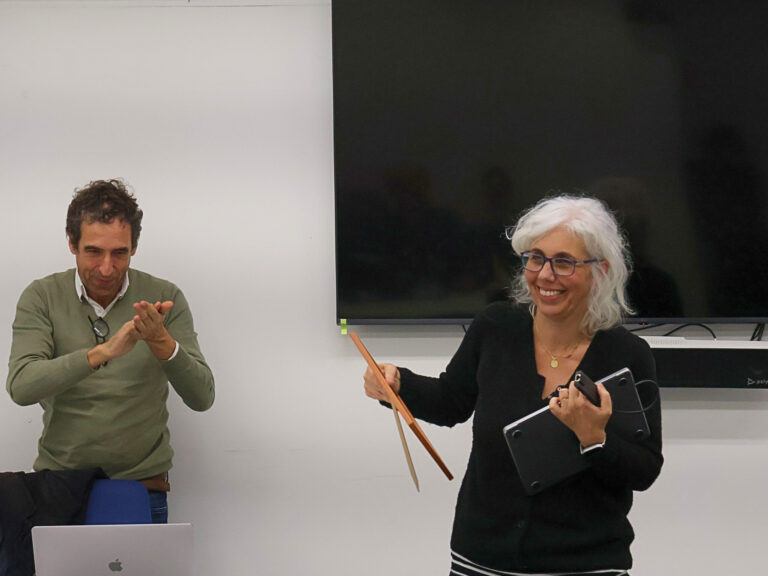
    Closing the year, the INESC-ID Awards 2025 brought together researchers, students and staff to recognise three outstanding contributions to the institute’s scientific life and impact.

    Hosted by the President of the Scientific Council, Rodrigo Rodrigues, the packed hybrid ceremony awarded Best INESC-ID Researcher to Luísa Coheur, Best Young Researcher to  Christof Torres and Best PhD Student to Pedro Orvalho.

    The recipients gave short presentations of their work. Luísa gave an overview of research on transparent and inclusive machine translation evaluation, including efforts to adapt this work to translation niches such as sign language; Christof, speaking live from Berlin, discussed his ongoing research on fortifying decentralised financial systems, wallet privacy and cross-chain sandwiching; and Pedro, now a postdoctoral researcher at the Barcelona AI Research Institute, presented MENTOR, a semantic automated program repair framework for programming exercises designed for use in educational environments.

    About the INESC-ID Awards:

    Since 2009, the INESC-ID Awards are presented annually to honour researchers whose work has made a significant contribution to the scientific life and impact of the institute, helping nurture a culture of excellence and commitment within INESC-ID’s scientific community.

    Winners are selected by an independent jury composed of world-renowned experts from the INESC-ID Advisory Board, ensuring a rigorous and external evaluation of the research conducted at the institute.

    © 2025 INESC-ID

    Images | © 2025 INESC-ID


  • INESC-ID researchers develop AI model inspired by human vision

    INESC-ID researchers develop AI model inspired by human vision

    From unlocking our phones with facial recognition to self-driving cars, AI-based computer vision is increasingly part of the technologies we use. Yet there is still much to learn from how we see the world.

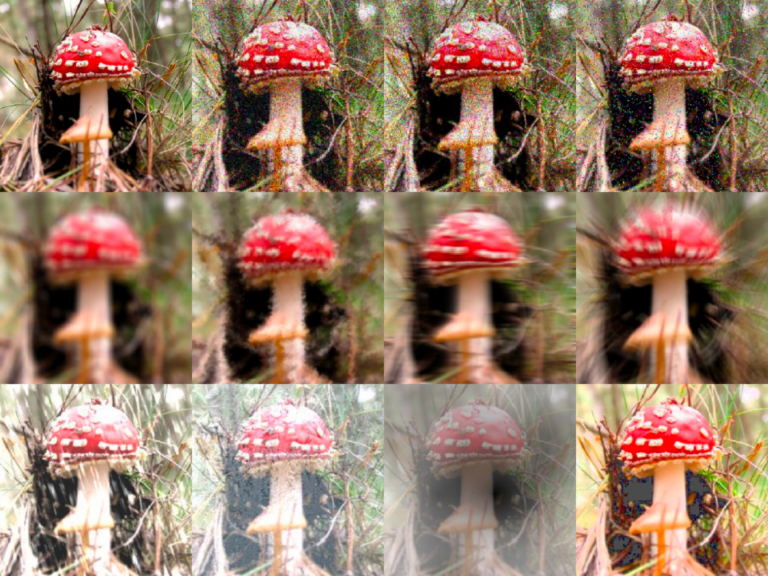
    To address this gap, researchers from INESC-ID, Instituto Superior Técnico (IST), and the Champalimaud Foundation (CF) have developed EVNets – Early Vision Networks, an AI model inspired by the primate visual system to improve robustness in image analysis.

    The research, developed by Lucas Piper and Arlindo Oliveira (INESC-ID and Instituto Superior Técnico), together with Tiago Marques (Champalimaud Foundation), was recently presented by Lucas at NeurIPS 2025 in San Diego, one of the most prestigious international conferences in Machine Learning and AI.

    EVNets build on earlier research into how primates process visual information, integrating biological principles to enhance performance in computer vision tasks. The model is particularly effective when dealing with distortions such as brightness or contrast variation, situations that human vision handles naturally but that remain challenging for many traditional AI systems.

    This biologically inspired approach also supports more interpretable and transparent algorithms. We want to develop models that we can comprehend and explain,” said Lucas. “If these algorithms are aligned with how the human brain works, they are already more inherently understandable.”

    At the Breast Cancer Research Program at the Champalimaud Foundation, EVNets are already being tested to determine whether the model can analyse medical imaging scans from different manufacturers more reliably than current AI methods. If the improvements in robustness translate to clinical data, EVNets could contribute to more consistent diagnostics and support patient care.

    © 2025 INESC-ID
    Image: Tiago Marques / Champalimaud Foundation

  • More than a gut-feeling: using AI to analyse the gut microbiome and its impact on menopause

    More than a gut-feeling: using AI to analyse the gut microbiome and its impact on menopause

    There are many places that provide a home for these microscopic communities we call the “microbiome”. One such location is none other than the human gut, where the microorganisms play a crucial role in a range of processes such as metabolism, immunity and even behaviour. The AGEWISE: Unravelling the gut-hormone axis in Women’s Aging, project awarded the 2024 Portugal grant from the Biocodex Foundation and led by Ana Santos Almeida at GIMM-CARE, brought together a multidisciplinary team of researchers from GIMM, INESC-ID, and the Faculty of Medicine of the University of Lisbon to analyse the impact of the microbiome in one specific life stage: menopause.

    The fact that gut bacteria are responsible for metabolising estrogen, the most important hormone during menopause, led to the hypothesis of a connection between this life stage and the microbiome. The methodology begins by assessing behavioural patterns and analysing blood and gut microbiome samples from several women, before and during menopause, to identify the microorganisms and hormones present. At INESC-ID, the team is led by Ana Teresa Freitas, researcher in Information Decision and Support Systems and coordinator of the Life and Health Technology thematic line. The group is using deep learning to develop computational tools that will analyse the biological data and support non-invasive diagnosis.

    In addition, the INESC-ID team is developing risk models to assess colorectal cancer and other potential diseases associated with menopause. The results could help understand if the gut microbiome could serve as a biomarker of symptoms or as a risk indicator of disease. Furthermore, the project team hopes that in the future, it could be modulated to help prevent serious diseases.

    This research is of particular importance for its focus on a condition exclusive to women. With many healthcare studies based mostly on male patients, the information gathered from this research could represent a significant advancement, not only regarding menopause, but also gut-related issues in women’s health.


    © 2025 INESC-ID

    Image | © Pexels

  • Serious games go to Parliament: INESC-ID showcases research-driven play for inclusion, trust and social good 

    Serious games go to Parliament: INESC-ID showcases research-driven play for inclusion, trust and social good 

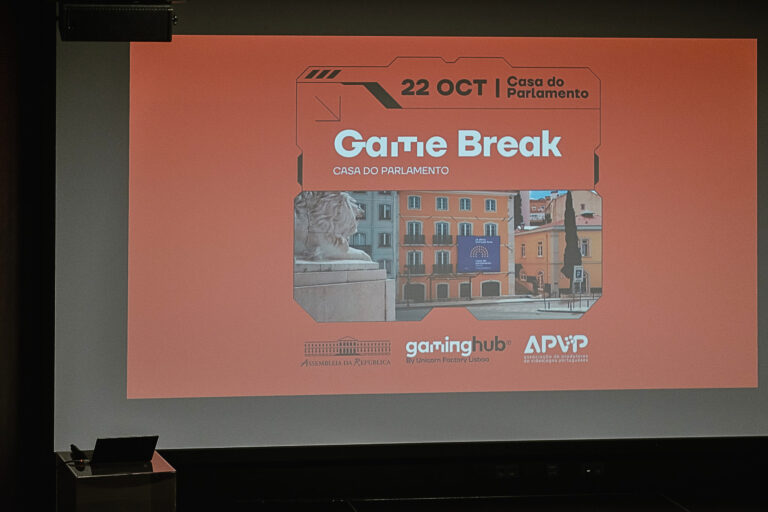
    In the house of democracy, all sorts of games are played. But on October 22, a few members of parliament and advisors only had to cross the street from Assembleia da República to Casa do Parlamento, an interactive and multimedia centre dedicated to the history and functioning of the Portuguese Parliament, to step into a different kind of game: discovering how video games are being used for social good, including contributions from INESC-ID in the field of serious games and Portugal’s video game industry. 

    This special edition of Game Break, organised by the Gaming Hub at Unicorn Factory Lisboa, with the support of the Portuguese Video Game Producers Association (APVP), brought together policymakers, researchers, industry professionals, universities and civil society to explore together how video games are shaping the future of the sector in Portugal.

    Inês Lobo and Miguel Belbute, PhD students in the Artificial Intelligence for People and Society scientific area (at GAIPS), represented INESC-ID with interactive demonstrations of two serious games: All Sustainable and Geometry Friends. Both projects reflect the institute’s thematic line on Societal Digital Transformation, which explores how digital technologies can empower informed decision-making and promote inclusivity and positive social change.

    Co-designing sustainability and inclusion 

    All Sustainablea digital game designed to teach sustainability concepts, is the result of a collaboration between INESC-ID researchers at GAIPS and users from CERCIOEIRAS. Across five co-design sessions, participants contributed to the game’s content and structure, from defining challenges related to sustainability and independent living, to deciding gameplay elements like narrative, rules, and characters. This gave participants a chance to help develop something they found both relevant and fun, reinforcing the inclusive philosophy behind the project. 

    Initially created for people with intellectual disabilities, the game has proven to be a valuable tool for helping children develop sustainability-related skills. It is now also being adopted in schools.
    “It’s incredibly rewarding to develop these games for minority groups and to see more people interested in getting them to those who need them,” says Miguel Belbute. “But what excites me most is seeing the results. For instance seeing neurodivergent children play and knowing it’s making a difference.” 

    For Miguel, who enjoys showing the “human” side of games, the fact that All Sustainable was co-designed with people with intellectual disabilities allows to better understand their relationship with digital games and what really connects them to the experience. That was one of the key messages he and Inês Lobo shared with the many visitors, from parliamentary advisors and game industry professionals to university professors and students from across the country. 

    Trust isn’t a simple game 

    In turn, Geometry Friends, demonstrated by Inês, is a 2D puzzle platformer game where two characters, a circle and a rectangle, each with unique movement abilities, must collaborate to collect diamonds and complete levels. Designed as a cooperative game, the characters, representing a human and an autonomous agent, need to work together to reach a common goal. 

    “In our study, we use this game to explore how people perceive different types of agents — those that lead the game and those that follow the player’s plan,” she explains. 

    The reactions, Inês notes, are far from predictable. “They depend not only on personal preferences, such as favouring cooperative or competitive games, but also on the framing of the game itself: whether it’s presented as a collaborative mission or not.” 

    Also developed by GAIPS , Geometry Friends serves as a platform for AI research, including reinforcement learning and studies in human-agent collaboration. Its design requires players, whether human or AI, to combine efforts and unique capabilities, making it an ideal “laboratory” for developing artificial intelligence. The game provides inexpensive virtual simulations where algorithms can be tested and refined across thousands of interactions; research that has direct implications for the design of systems we interact with every day, from virtual assistants to social robots. 

    Serious games, a serious business 

    Serious games are not designed to simply entertain, but to educate, train and inform. Used in contexts such as education, healthcare or professional training, these games are gaining ground as tools for social transformation. 

    Miguel and Inês noted that several members of parliament showed genuine curiosity. “The majority had no idea about the dimension of the gaming industry or what was happening in the field,” Miguel shared. 

    In fact, far from being just child’s play, according to a study by Bain & Company, video games are already the world’s largest entertainment industry, expected to generate €190 billion in revenue in 2025. Serious games are also growing fast, with a market estimated at €14 billion and annual growth rates of up to 25% through 2030. In Portugal, with over 160 active video game studios, projected 2024 revenues above €100 million and a 60% annual growth, the national video game industry is thriving.

    As digital technologies increasingly influence how we learn, decide, and engage with each other, INESC-ID has an important role to play. The growing momentum of the video game industry — and the research driving it — holds real potential for impact. And if we want a more participatory and inclusive democracy, maybe it’s time we start taking games more seriously. 


    Text by Rodrigo Abril de Abreu | Head of Communications and Outreach Office, INESC-ID

    © 2025 INESC-ID. Credit INESC-ID and the author, with a link to the original source, when sharing this article.

    Images: APVP

  • After the lights went out: MIT and INESC-ID researchers team up to prevent the next blackout

    After the lights went out: MIT and INESC-ID researchers team up to prevent the next blackout

    Long queues outside corner shops and bakeries. Supermarkets closed. Anxious people carrying gas cylinders, bags of charcoal, batteries, and candles. In an instant, and for several hours, the fast, digital rhythm of 21st-century life was unplugged. 

    The unprecedented Iberian blackout that left Portugal and Spain “in the dark” on the morning of April 28 exposed just how reliant modern society is on the seamless functioning of our electrical grids. 

    In the weeks that followed, the event triggered international media attention, quickly becoming politicized and a lightning rod in the renewable energy debate, as the Iberian Peninsula is one of the world’s regions with the highest levels of renewable energy production.

    Experts across the sector, including INESC-ID researchers and Instituto Superior Técnico professors Pedro Carvalho and Rui Castro, helped clarify the technical complexity of the event and the deeper challenges it revealed for Europe’s ongoing energy transition. (Read our earlier article here.) 

    “It immediately caught the world’s attention. Because we have one of the highest shares of renewables, what happened here became a weapon in the political debate.” –  Pedro Carvalho 

    But now, the key question is: how do we prevent this from happening again? 

    Events like these are often compared to forest fires – all too familiar in Portugal. Once they begin, they are incredibly hard to stop. Which is why building resilience and improving control in such a tightly interconnected system is essential. 

    That’s precisely the focus of a new project titled “Assessing and Mitigating Blackouts: The Case of Iberian 2025 Blackout”, recently awarded a US$200K seed grant by the MIT Portugal Program. The MIT Portugal Seed Fund is awarded exclusively to MIT Principal Investigators, with proposals that include collaboration with Portuguese faculty, students, industry, or other institutions in Portugal. 

    The project is co-led by Marija Ilic, professor and researcher at MIT and Pedro Carvalho—long-time collaborators with nearly two decades of joint work on modelling power systems and grids. Their research will explore two innovations designed to prevent future large-scale blackouts while allowing the continued integration of high levels of renewable energy sources. 

    The first involves simulating the electric power grid interconnecting France, Spain, Portugal, and the underwater connection to Africa—all affected during the April 28 event. The team will reconstruct the chain of events, assess vulnerabilities, and explore how cross-border exchanges, particularly between France and Spain, can be better coordinated to prevent voltage collapse. 

    The second innovation focuses on developing an adaptive power electronics control system capable of stabilising voltage and frequency during extreme grid disturbances. This mechanism is intended to avoid the premature activation of protection protocols that can inadvertently shut down the entire system. 

    Together, these innovations could help prevent widespread blackouts, while supporting the transition to cleaner, decentralised energy. To achieve this, the two co-investigators are rethinking today’s operating and planning practices, and aim to deliver recommendations for policymakers.  

    For Portugal, that work now includes INESC-ID, through Pedro Carvalho. As a member of the newly formed Technical Advisory Group for Strengthening the Security and Flexibility of the National Electricity System – set up by Portugal’s Minister for Environment and Energy and expected to soon deliver a public report – he is uniquely positioned to help turn research into action. 

    The group’s goal is to reinforce the grid’s resilience against future blackouts. For INESC-ID, this participation also reflects recognition of its expertise in energy systems, increasingly called upon in both research and policy contexts. 

    The project won’t just be academic. Using MIT’s Power Digital Twin to simulate real-world situations—recently deployed in Puerto Rico to prepare its power grid for hurricanes—the team will better understand the vulnerabilities of the Iberian grid and identify improvements, all while maintaining high use of renewables. 

    What adds further urgency and relevance to this research is the current political context. Although the blackout has disappeared from media headlines, “behind the scenes, utilities, especially in Spain, are still under tremendous pressure. Many companies are demanding millions in compensation,” Carvalho explains. 

    But practical changes are already underway. In the future, insights from this project could be applied to other regions with high renewable penetration, such as Texas, California, and Northern Europe, and provide recommendations to help industry and governments design better mitigation strategies. 

    In the immediate aftermath of the event, uncertainty and lack of information sparked speculation ranging from technical failure to fears of a Europe-wide cyberattack. We were bluntly reminded that our increasingly decentralised and interconnected critical infrastructures are not just technical, they are a societal nervous system.


    Text by Rodrigo Abril de Abreu | Head of Communications and Outreach Office, INESC-ID
    © 2025 INESC-ID. Credit INESC-ID and the author, with a link to the original source, when sharing or adapting this article.

  • In the Media: Helping journalists verify facts faster with trustworthy AI

    In the Media: Helping journalists verify facts faster with trustworthy AI

    INESC-ID PhD student Filipe Altoe, MSc student Sérgio Pinto, and researcher Sofia Pinto, also a Professor at Instituto Superior Técnico, are behind a new fact-checking AI model that was recently featured in national media, including Expresso, Observador, and SIC Notícias. 

    The article, presented last week at the international conference IJCAI 2025 in Montreal, proposes an AI model that automates the complex process of verifying information, helping journalists respond faster to digital misinformation, with full transparency and without replacing their judgement.

    The model was tested with the collaboration of more than 100 professional journalists, who helped validate its functionality and the quality of its explanations.

    This work exemplifies INESC-ID’s ongoing research in trustworthy and explainable AI, advancing methods that make artificial intelligence more transparent and reliable.

    Read the article on Expresso: here
    Read the article on SIC Notícias: here

  • INESC-ID PhD Student Awarded Best Student Paper Award at ISVLSI 2025

    INESC-ID PhD Student Awarded Best Student Paper Award at ISVLSI 2025

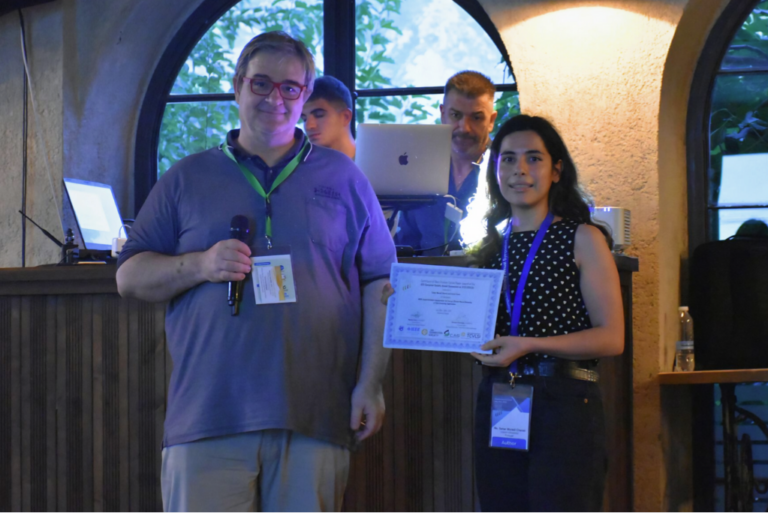
    Sahar Moradi Cherati, one of our PhD Students in High-Performance Computing Architectures and Systems (HPCAS) was awarded the “Best Student Paper Award” during the IEEE Computer Society Annual Symposium on VLSI (Very-large-scale integration).

    Sahar’s work “MSDF-Based Hardware Accelerators for Energy-Efficient Neural Networks in Edge Computing Applications”, is co-authored by her supervisor HPCAS researcher Leonel Sousa. It explores a new approach to designing Multiply-Accumulate (MAC) units using Most Significant Digit First (MSDF) arithmetic. The goal is to enhance neural network performance on edge devices by minimising latency and effectively managing energy and area constraints.

    It’s encouraging to see this work recognised, and I’m grateful for the support and guidance I’ve received throughout this work.” adds Sahar.

    For over three decades the Symposium has been a unique forum promoting multidisciplinary research and new visionary approaches in the area of VLSI. The 2025 Symposium explores emerging trends and novel ideas and concepts covering a broad range of topics, from VLSI circuits, systems and design methods, to bringing VLSI design to new areas and technologies. This year it was co-located with the event “Empowering Women in Hardware & Chip Design: Challenges & Success Stories” organised by #SMART4Women.

  • A Year of Laps around the Earth: Celebrating ISTSat-1’s first anniversary in orbit

    A Year of Laps around the Earth: Celebrating ISTSat-1’s first anniversary in orbit

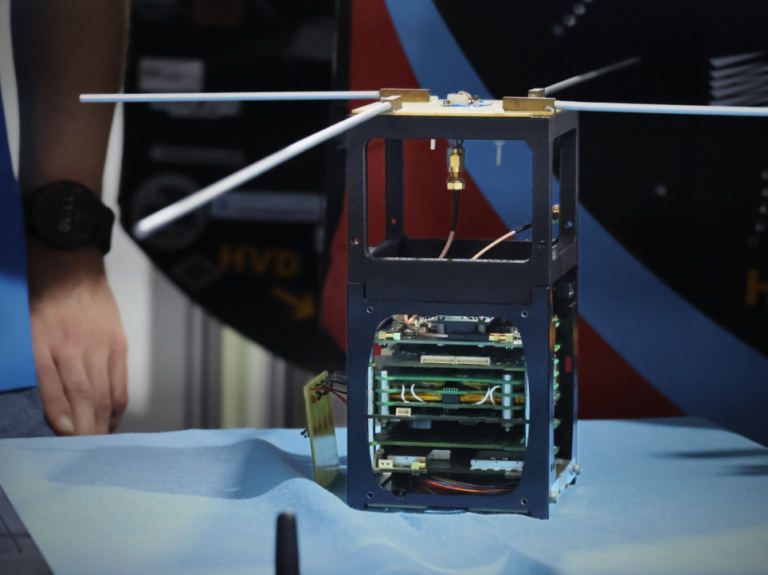
    One year ago, Portugal launched its first university satellite into space, aboard the European Space Agency’s (ESA) Ariane 6 rocket, with the mission of testing its ability to detect aircraft in remote areas. 

    The commemorative event took place this July 9 at the Central Atrium of Técnico – Oeiras Campus, gathering institutional partners, space sector specialists, and members of the academic community to celebrate this milestone and reflect on the future of Portuguese aerospace engineering. The program included presentations by Rui Rocha, project coordinator and co-founder of NanoSat Lab; Rogério Colaço, president of Técnico; Joana Mendonça, vice-president of Técnico – Oeiras Campus; and Pedro Patacho, Education Councillor of the Municipality of Oeiras.

    Floating at 580 km above Earth’s surface, in low orbit, the satellite has gone around our planet a total of 5500 times, 1460 of which passed right above the Técnico – Oeiras campus, its home base. It was not, however, always an easy journey. The team faced an unexpected obstacle, as the reception of signals from orbit turned out to be challenging due to inherent problems related to the connection between the radio and transmission antennas. To solve this, the team of around 50 Técnico students, teachers and researchers had to resort to building giant antennas until additional ground stations were established. With the help of radio amateurs, these efforts proved successful.

    The project received financial support of INESC-ID, Instituto Superior Técnico,  the Instituto de Telecomunicações (IT), at the Instituto de Engenharia Mecânica (IDMEC). It also involved the participation of members of the Instituto de Sistemas e Robótica (ISR-Lisboa), as well as the support of several companies linked to the sector.

    Read the full article here

    Image | © 2024 INESC-ID

  • Call for Expressions of Interest: MSCA Postdoctoral Fellowships 2025 at INESC-ID

    Call for Expressions of Interest: MSCA Postdoctoral Fellowships 2025 at INESC-ID

    INESC ID is currently inviting Expressions of Interest from researchers interested in applying for the Marie Skłodowska-Curie Actions Postdoctoral Fellowships (MSCA PF 2025), with INESC-ID as their host institution.

    We welcome highly motivated postdoctoral candidates of any nationality interested in developing cutting-edge research in one of our scientific areas.

    The MSCA PF program offers competitive funding for 12–24 months, salary, mobility, and family allowances. Fellows will benefit from INESC-ID’s dynamic research environment, experienced supervision, and a strong international collaboration network.

    Candidates must meet the following eligibility criteria of the call, including:

    • hold a PhD degree on the closing date for applications. Applicants who have successfully defended their doctoral thesis but who have not yet formally been awarded the doctoral degree are also eligible to apply
    • have a maximum of eight years of experience in research from the date of the award of the PhD degree
    • comply with mobility rules: they must not have resided or carried out their main activity (work, studies, etc.) in the country of the beneficiary (in this case, Portugal) for more than 12 months in the 36 months immediately before the call deadline

    Full conditions are published at the announcement of the MSCA PF 2025 Call.

    To express your interest, please send the following documents by June 30th to this e-mail (silvia.castro@inesc-id.pt):

    • A short CV (max 2 pages)
    • A brief outline of your research proposal (max 1 page)
    • Preferred Thematic Line/Scientific area or potential supervisor at INESC-ID

    We encourage prospective candidates to get in touch as early as possible to ensure adequate time for proposal development and support. For any questions, please contact us at silvia.castro@inesc-id.pt