Category: Research Highlights

  • SenToy stars in IST’s “110 Histórias | 110 Objetos” podcast
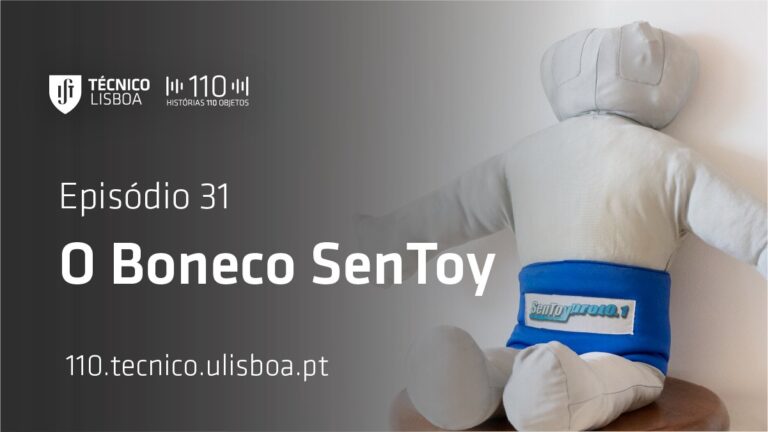
    SenToy stars in IST’s “110 Histórias | 110 Objetos” podcast

    This week’s episode of the “110 Histórias | 110 Objetos” podcast (which roughly translates to “110 Stories | 110 Objects”) features SenToy: a faceless, genderless and ageless toy, developed to communicate emotions to a computer and interact with a video game.

    SenToy originated in a European project, Safira, coordinated by Ana Paiva, researcher at the Group on Artificial Intelligence for People and Society (GAIPS) at INESC-ID and Full Professor at the Department of Computer Engineering (DEI) at Instituto Superior Técnico. Rui Prada, researcher at GAIPS and Associate Professor at Instituto Superior Técnico, also participated in this project and has a couple of tales to tell on SenToy.

    For the podcast episode and some extra bits of content, please follow this link.

  • INESC-ID coordinates a European project on electric mobility

    INESC-ID coordinates a European project on electric mobility

    The EV4EU project, with a duration of 4 years, is funded by the European Union in 9 million euros through Horizon Europe, the new research and innovation programme for the period 2021-2027.

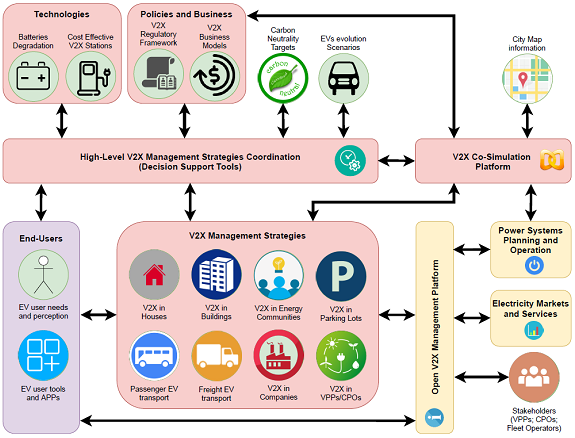
    Studies indicate that the massive use of electric vehicles will significantly contribute to the carbon neutrality goals set for 2050, as defined by the European Commission. However, the mass deployment of electric vehicles still presents several challenges: from market maturity and the cost of electric vehicles to user adoption, the charging infrastructure and the lack of policies to promote the use of these vehicles. To address these challenges, the “Electric Vehicles Management for carbon neutrality in Europe” (EV4EU) project will propose and implement user-centric Vehicle-to-Everything (V2X) management strategies, creating the conditions for the mass deployment of electric vehicles. The proposed V2X management strategies will be tested at four demonstration sites: in Portugal on the island of São Miguel; in the Mesogia area in Greece; at Risø and Rønne, island of Bornholm, Denmark; and in Slovenia.

    Hugo Morais, senior researcher at INESC-ID, Professor at the Department of Electrical and Computer Engineering (DEEC) of Instituto Superior Técnico, and project coordinator, explained: “EV4EU is expected to contribute to the implementation of the EU Sustainable and Smart Mobility Strategy and Action Plan, proposed by the European Commission. Given the diverse composition of the consortium, the main results of the project will be disseminated to various audiences, nationally, in Europe and worldwide.”

    INESC-ID leads the consortium of sixteen entities from four European countries, which comprise: three research institutions; an institution of higher education; three small and medium-sized companies; seven large companies; a government institution; and an educational establishment, which will be an end user in the EV4EU project. Among these types of partners are Distribution System Operators (DSOs), technology providers, a virtual power plant (VPP), a Charging Point Operator (CPO) and an automobile manufacturer.

    ________________________________________________________________

    O projeto EV4EU, com duração de quatro anos, é financiado pela União Europeia em 9 milhões de euros através do Horizonte Europa, o novo programa de investigação e inovação para o período 2021-2027.

    Estudos recentes indicam que o uso massivo de veículos elétricos contribuirá significativamente para as metas de neutralidade de carbono a serem atingidas até 2050, tal como definidas pela Comissão Europeia. No entanto, a implantação em massa de veículos elétricos apresenta ainda vários desafios: da maturidade do mercado e os custos associados a veículos elétricos, à adoção pelo utilizador, a infraestrutura de carregamento ou a falta de políticas que promovam a utilização destes veículos. Para abordar estes desafios, o projeto “Electric Vehicles Management for carbon neutrality in Europe” (EV4EU) irá propor e implementar e demonstrar estratégias de gestão de Vehicle-to-Everything (V2X) centradas no utilizador, criando as condições necessárias para a implantação em massa de veículos elétricos. As estratégias de gestão de V2X propostas serão testadas em quatro locais de demonstração: em Portugal na ilha de São Miguel; na área de Mesogia na Grécia; em Risø e Rønne, ilha de Bornholm, na Dinamarca; e na Eslovénia.

    Hugo Morais, investigador sénior do INESC-ID, docente do Departamento de Engenharia Eletrotécnica e de Computadores (DEEC) do Instituto Superior Técnico e coordenador deste projeto, explicou: “Espera-se que o EV4EU contribua para a implementação da Estratégia e o Plano de Ação para a Mobilidade Sustentável e Inteligente proposta pela Comissão Europeia. Dada a composição multidisciplinar do consórcio, os principais resultados do projeto serão disseminados por vários públicos, tanto a nível nacional, como europeu e mundial.”

    O INESC-ID lidera o consórcio constituído por dezasseis entidades de quatro países europeus, entre as quais: três instituições de investigação; uma instituição de ensino superior; três pequenas e médias empresas; sete grandes empresas; uma instituição governamental; e um estabelecimento de ensino, que será um utilizador final no projeto EV4EU. Entre estas tipologias de parceiros, encontram-se operadores do sistema de distribuição elétrico, fornecedores de tecnologia, um agregador (Virtual Power Plant), um operador de pontos de carregamento e um fabricante de automóveis.

  • New exploratory research projects at INESC-ID supported by FCT and CMU Portugal program

    New exploratory research projects at INESC-ID supported by FCT and CMU Portugal program

    The CMU Portugal Program supports the launch of Exploratory Research Projects (ERPs) on a regular basis, with the main objective of promoting Portugal’s international competitiveness and innovation capacity in Science and Technology (S&T) in Information and Communication Technologies (ICT). In the 2021 call, from a total of six exploratory research projects supported by this international partnership, two of them will be coordinated by INESC-ID:

    -DIVINA: Detecting Injection Vulnerabilities In Node.js Applications, coordinated by José Fragoso dos Santos and with the participanting institution IT, with a total funding of 69 941,66€

    -DaNon: Supervised Deanonymization of Dark Web Traffic for Cybercrime Investigation , coordinated by Nuno Santos, within a consortia with INESCTEC and FCiências.ID, with a total funding of 62 514,30€

  • Research project ID-GAMING awarded by Erasmus+ Agency for Education and Training

    Research project ID-GAMING awarded by Erasmus+ Agency for Education and Training

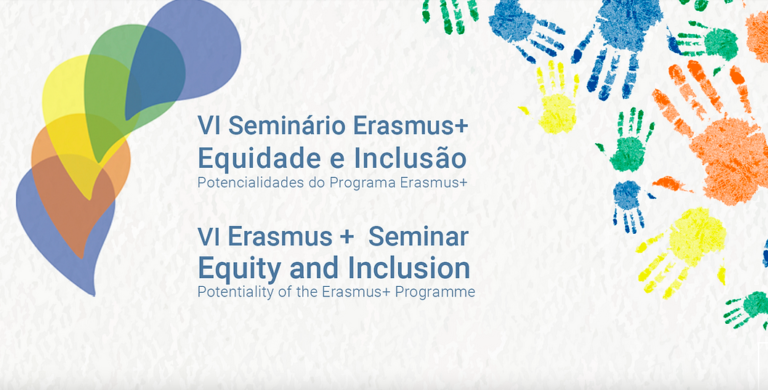
    The ID-GAMING research project was awarded by the Erasmus+ National Agency Education and Training. The Inclusive E+ Awards ceremony will be on November 30th.
    This Erasmus+ international project, which principal researcher at INESC-ID is Rui Prada, expects to increase the competences of persons with intellectual disabilities and related professionals and relatives in the implementation of serious games for improving cognitive functions.
    
    For more information: https://id-gaming-project.eu/
    
    For attending this special ceremony: https://www.erasmusmais.pt/equidade-e-inclusao-2021


  • Best Paper Award at the Human-Agent Interaction 2021

    Best Paper Award at the Human-Agent Interaction 2021

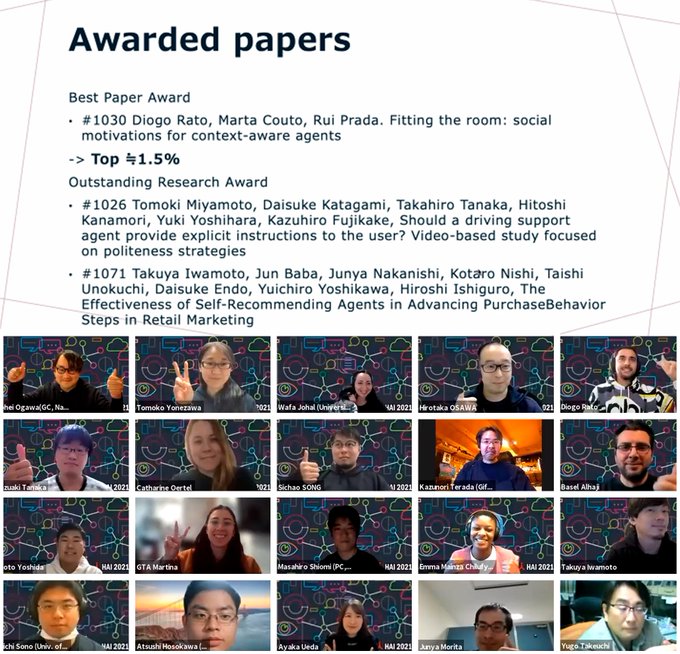
    The paper “Fitting the room: Social Motivation for Context-aware Agents” by Diogo Rato, Marta Couto and Rui Prada was awarded the Best Paper Award at the Human-Agent Interaction 2021.

  • HeartGenetics recognised as the Digital Health Company of the Year – Portugal

    HeartGenetics recognised as the Digital Health Company of the Year – Portugal

    HeartGenetics was one of the winners of the “Global Health & Pharma’s Healthcare & Pharmaceutical Awards 2021”.

    HeartGenetics, an INESC-ID startup and member of the IST Spin-off Community, was recognised as the Digital Health Company of the Year -Portugal. The Portuguese startup was one of the winners of the “Global Health & Pharma’s Healthcare & Pharmaceutical Awards 2021”, delivered by the Global Health & Pharma (GHP).

    GHP hosts the Healthcare & Pharmaceutical Awards for a sixth consecutive year and honour the innovation, determination and outstanding levels of care demonstrated by those responsible for bringing to the sector new ideas and products that help the development of the sector.

    These awards are based on various criteria such as business performance, business growth, longevity and customer feedback.

    HeartGenetics aims to use genetic information to improve everyone’s health and well-being. Internationally recognised in the areas of molecular biology, genetics, information technology and artificial intelligence, the Digital Health Company is able to extract genetic data from a simple saliva sample and generate a report containing very useful and easy-to-read information.

    Source: Técnico

  • INESC-ID researchers among the World’s Top 2% Scientists list

    INESC-ID researchers among the World’s Top 2% Scientists list

    The Stanford University recently released an update of the World’s Top 2% Scientists list, which includes more than 100,000 researchers. 124 Técnico researchers were included in the ranking of the world most influential researchers in their fields, which represents a substantial increase compared to 2020.

    The ranking covers 22 major fields and 176 subfields. The updated list published on 19th October used Scopus database until August 2021.

    Gil Marques, Arlindo Oliveira, Leonel Sousa, José Fernando Silva, Francisco C. Santos, Ana Paiva, Joaquim Jorge,  João Paulo Carvalho, Luís M. Correia are some of INESC-ID researchers in this world’s top 2% scientists list. The presence of INESC-ID researchers in the list of the most influential researchers in the world reflects the high quality of scientific production and the excellence of our researchers in multiple areas.

    Among INESC-ID researchers, an extense list of Técnico researchers can be seen here: https://tecnico.ulisboa.pt/files/2021/11/lista-de-nomes_top-cientistas_2021.pdf

    Source: Técnico

  • Leonel Sousa appointed to the ACM Distinguished Speakers Program Committee

    Leonel Sousa appointed to the ACM Distinguished Speakers Program Committee

    Leonel Sousa, researcher at INESC-ID and professor at the Instituto Superior Técnico, was appointed to the ACM Distinguished Speakers Program Committee, and  is among the 8 nominees who will be part of the committee responsible for the oversight of the program.

    “After an excellent experience, for three years, as ‘Distinguished Speaker’ at ACM, I was surprised to be invited to join the ACM Distinguished Speaker Program Committee”, says the INESC-ID researcher and Técnico professor, who also explains “this program is responsible for selecting ‘Distinguished Speakers’, distinguished colleagues from academia and companies in the area of computer systems.”

    The ACM speakers represent a wide range of businesses, colleges and universities, including: IBM, Microsoft, BBN Technologies, Raytheon, Sony Pictures Imageworks, Lawrence Livermore National Laboratory, Siemens Information Systems, Stanford University, Carnegie Mellon, University of British Columbia, Georgia Tech, UCLA, McGill University, Tsinghua University and many others.

    Founded in 1947, ACM is an important and prestigious organisation that brings together computing educators, researchers, and professionals, and promotes computer research and innovation through its journals, magazines, high quality scientific events and conferences.

    **Técnico news credits

  • ILU: A technology to help improve Urban Mobility

    ILU: A technology to help improve Urban Mobility

    INESC-ID is developing a project in partnership with National Civil Engineering Laboratory, Câmara Municipal de Lisboa (Lisbon Municipality), and the major public carriers in the Lisbon metropolitan area with the aim of aligning urban mobility plans with the emerging traffic dynamics.

    The ILU project (Integrative Learning from Urban Data and Situational Context for City Mobility Optimization) aims to improve mobility in Lisbon by analyzing heterogeneous sources of traffic data produced by ticketing systems, stationary road sensors, and mobile devices; therefore: 1) supporting the transparency of urban mobility plans to the citizen; 2) offering a solid ground for coordination efforts among municipalities and public transport operators; and 3) ensuring the public transport system responds to the ongoing city transformations and changes observed in a pandemic context.

    To this end, the ILU APP, a pioneer recommendation system that integrates the main computational contributions of the project, is being developed. ILU APP offers a multimodal, dynamic and context-sensitive analysis of urban traffic, combining five main features:

    • automatic consolidation of urban data sources from public transport operators and PGIL (platform for intelligent management in Lisbon) with potential impact on the city traffic analysis, with particular attention to the provision of: efficient cross-modal spatiotemporal queries, Big Data visualization utilities, dynamic updates, mappings into data structures conducive to the subsequent machine learning tasks, and the inference of incomplete traffic flows, including alighting stop estimates in the CARRIS network;
    • descriptive analytics for detecting vulnerabilities and ongoing changes to mobility in the city, focusing on:

    – statistically significant traffic patterns, including: (a) frequent and periodic patterns indicative of overcrowding or congestion; (b) emerging traffic patterns that may reveal future vulnerabilities; (c) deviant patterns including anomalous variations in demand; (d) multimodal traffic synergies; and (e) correlations present in multiple sources of urban traffic;

    – dynamic inference of multimodal origin-destination matrices, allowing the detection of vulnerabilities in the network, including transfer needs and long journey times;

    • predictive analytics of traffic flows from various data sources, using innovative associative learning and deep learning principles. The facilities are provided within a solid statistical frame, enabling forecasts of road traffic or demand on the public transport network to be made with guarantees of significance and variability;


    • analytics sensitive to different sources of situational context, in particular the extension of the previous description and forecasting facilities for the study of traffic dynamics in the presence of historical and prospective context, including: (a) planned events (such as sport matches and cultural events), (b) weather forecasts, and (c) interdictions on public roads;


    • optimization facilities based on the previous data-centric models of traffic for: (a) adjusting the public transportation network by revising vehicle routing and frequency; and (b) designing intelligent traffic light control systems at specific city junctures. In this context, the ILU project is combining control and micro-simulation principles with advances from deep reinforcement learning.

    The recommendation system will be delivered in the form of a functional prototype to the project’s public partners – CML, CARRIS and METRO – to support their: (a) strategic decisions related to the city mobility; and (b) real-time operational decisions, including the signaling of the ongoing vulnerabilities in the mobility system.

    These contributions are expected to reveal untapped multimodal synergies and promote a sustainable urban mobility, giving priority for public transport options and the integration of active travel modes. Moreover, the modular, dynamic, and online nature of the devised contributions ensures their interoperability and scalability to other cities in the current pandemic era.


    [pt]

    ILU: A tecnologia a contribuir para melhorar a Mobilidade Urbana

    O INESC-ID está a desenvolver um projeto em parceria com a Câmara Municipal de Lisboa e o Laboratório Nacional de Engenharia Civil que visa contribuir para melhorar a Mobilidade Urbana.

    O projeto iLU (Integrative Learning from Urban Data and Situational Context for City Mobility Optimization) visa melhorar a mobilidade em Lisboa a partir da análise de dados da circulação automóvel e de transportes públicos. Pretende-se descobrir padrões de circulação na cidade, antecipar problemas e fazer recomendações.

    O INESC-ID está a desenvolver um projeto em parceria com o Laboratório Nacional de Engenharia Civil, a Câmara Municipal de Lisboa, e transportadoras na área metropolitana de Lisboa com o objetivo de alinhar os planos de Mobilidade Urbana com as emergentes dinâmicas de tráfego.

    O projeto ILU (Integrative Learning from Urban Data and Situational Context for City Mobility Optimization) visa melhorar a mobilidade em Lisboa através da análise de dados de tráfego produzidos por sistemas de bilhetagem na rede de transportes públicos, sensores rodoviários estacionários, e dispositivos móveis; visando: 1) apoiar a transparência dos planos de mobilidade urbana para o cidadão; 2) fortalecer a coordenação entre municípios e operadoras de transporte público a partir das vistas centradas nos dados; e 3) garantir que o sistema de transporte público responde às transformações em curso na cidade e às mudanças estruturas observadas em contextos pandémicos.

    Para tal, foi desenvolvida a ILU APP, um sistema de recomendação pioneiro que integra as principais contribuições computacionais do projeto. A ILU APP oferece uma análise multimodal, dinâmica e sensível ao contexto do tráfego urbano, combinando cinco características principais:

    • consolidação automática de fontes de dados urbanos presentes nos operadores de transportes públicos e disponibilizados na PGIL (plataforma para gestão inteligente em Lisboa), tendo particular atenção à disponibilização de facilidades de visualização, procuras eficientes, atualização dinâmica dos dados, mapeamentos em estruturas de dados conducivas às subsequentes tarefas de aprendizagem, e à inferência de fluxos de tráfego incompletos, incluindo estimativas do desembarque por passageiro na rede CARRIS;


    • analítica descritiva para detectar vulnerabilidades e contínuas alterações à mobilidade na cidade, com foco em:


    – padrões de tráfego estatisticamente significativos, incluindo: (a) padrões frequentes e periódicos indicativos de congestionamento ou sobrelotação; (b) padrões emergentes capazes de antecipar vulnerabilidades futuras; (c) padrões desviantes incluindo variações anómalas na procura; (d) sinergias multimodais no tráfego; e (e) correlações presentes nas múltiplas fontes de tráfego urbano;


    – inferência dinâmica de matrizes de origem-destino multimodais, permitindo a detecção de vulnerabilidades na rede, incluindo necessidades de transbordo e durações elevadas de viagem;


    • análise preditiva de fluxos de tráfego a partir de várias fontes de dados, usando princípios inovadores de aprendizagem associativa e aprendizagem profunda. As facilidades disponibilizadas têm um enquadramento estatístico sólido, permitindo realizar previsões do tráfego rodoviário ou de procura na rede pública de transportes com garantias de significância e variabilidade;


    • análises sensíveis a diferentes fontes de contexto situacional, em particular estendo as anteriores facilidades de descrição e previsão para o estudo da dinâmicas de tráfego na presença de contexto histórico e prospectivo, incluindo: (a) eventos planeados (desportivos e culturais), (b) registos e previsões meteorológicas, e (c) interdições em vias públicas;


    • optimizadores com base nos modelos de tráfego centrados em dados anteriores para: (a) ajustar a rede de transporte público revendo o roteamento e a frequência dos veículos; e (b) desenhar sistemas de controle de semáforos inteligentes em cruzamentos específicos na cidade. Nesse contexto, o projeto ILU combina princípios de controlo e micro-simulação com avanços em aprendizagem profunda com reforço.

    O sistema de recomendação será entregue sob a forma de um protótipo funcional aos parceiros públicos do projeto – CML, CARRIS e METRO – por forma a apoiar: (a) decisões estratégicas ligadas ao planeamento da mobilidade na cidade; e (b) decisões operacionais em tempo real, incluindo a sinalização de vulnerabilidades ou necessidades de reforço à oferta.

    Esperamos que estas contribuições revelem sinergias multimodais desconhecidas, promovendo uma mobilidade urbana mais sustentável, prioritizando as opções de transporte público e a integração de meios de transporte ativo (mobilidade pedonal, cicloviável, e partilhada). Além disso, a natureza modular e dinâmica das contribuições garante a sua extensão a outras cidades de Portugal e no mundo.

  • INESC-ID researchers awarded ACM SIGSOFT Distinguished Paper

    INESC-ID researchers awarded ACM SIGSOFT Distinguished Paper

    A joint team of researchers including INESC-ID researchers Vasco Manquinho and Pedro Orvalho will receive an ACM (Association for Computing Machinery) SIGSOFT Distinguished Paper Award for their work on a new analysis engine for the popular Alloy modeling language.

    The paper “AlloyMax: Bringing Maximum Satisfaction to Relational  Specifications” has been chosen to receive an ACM SIGSOFT Distinguished Paper Award at  upcoming ACM Joint European Software Engineering Conference and Symposium on the Foundations of Software Engineering (ESEC/FSE 2021).

    The team of authors is composed by Changjian Zhang (CMU), Ryan Wagner (CMU), Pedro Orvalho (INESC-ID/IST, Universidade de Lisboa), David Garlan (CMU), Vasco Manquinho (INESC-ID/IST, Universidade de Lisboa), Ruben Martins (CMU), and Eunsuk Kang (CMU).

    Distinguished papers are given to at most 10% of the papers accepted at  an ACM SIGSOFT-sponsored conference. The winners were chosen by the  program co-chairs from those papers that had either a nomination for  distinguished paper award, or at least two accept scores and no  negative scores.  In total eight papers were recognized this year.

    “The Alloy language is widely used in software engineering for verification, automatic generation of test cases, or security analysis. Considering that the software is currently pervasive on any device we use, some defects can result in serious failures in the operation and safety of the devices”, mentioned Vasco Manquinho.

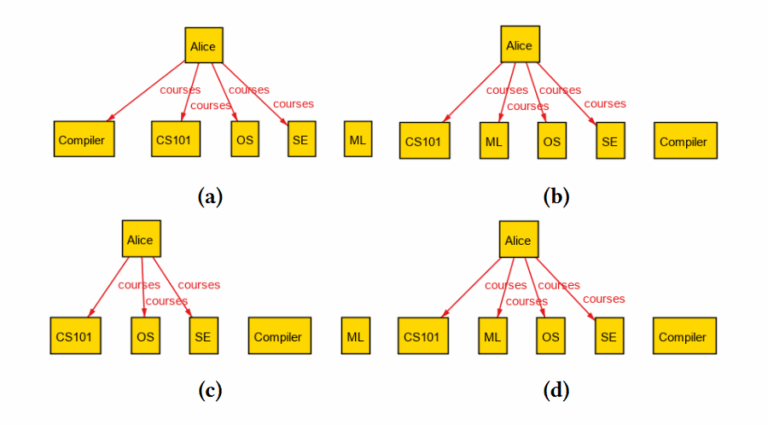
    The work, in collaboration with the CMU team, extends the Alloy modeling language to enable the generation of optimal solutions according to a given optimization criterion. For example, it enables to obtain solutions that maximize the performance or security of systems. The INESC-ID research team has a long-term collaboration  with Prof. Rúben Martins (CMU) in the development of new  optimization algorithms using computational logic.

    “This distinction is important because it allows greater visibility to our work in the field of computational logic. Reality is demonstrating the importance of this area in numerous engineering contexts”, adds the INESC-ID researcher.