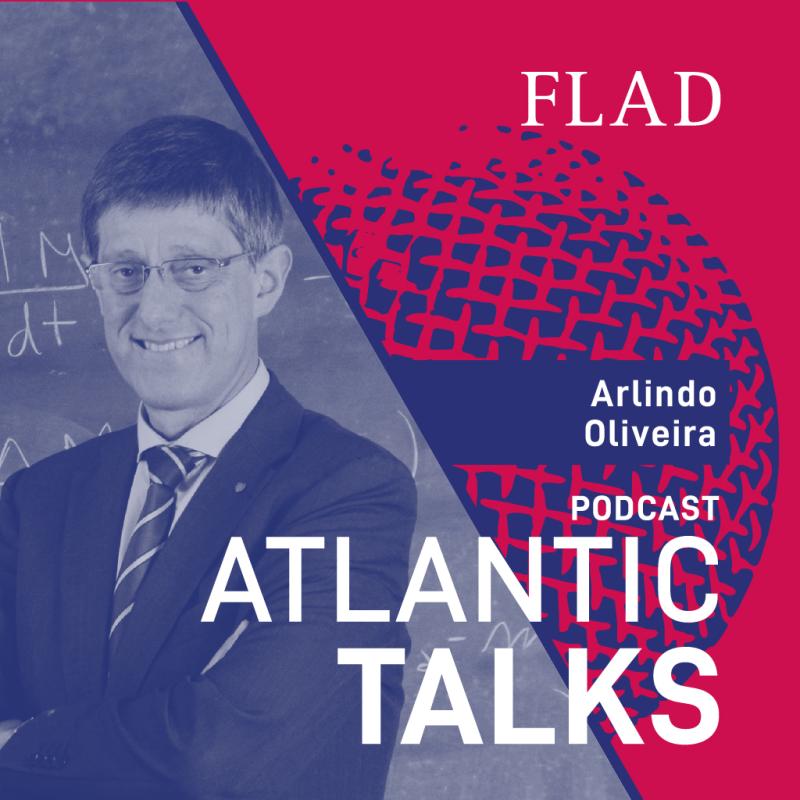
Can machines think?
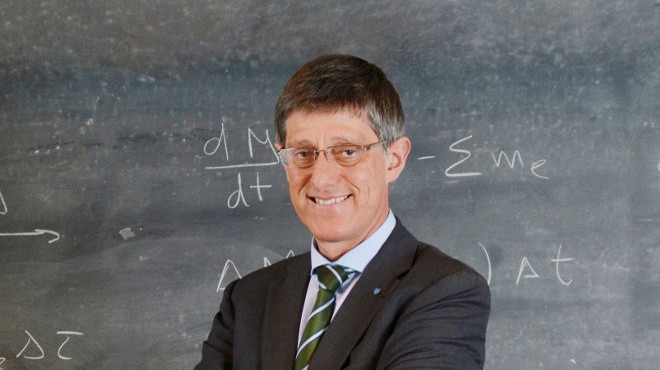
Arlindo Oliveira is the next guest of “Explain it like I’m 5 – talks at Técnico for children and other curious people of all ages”.
The talk takes place live at Instituto Superior Técnico Facebook, on September 5, at 11am.

Can machines think?
Arlindo Oliveira is the next guest of “Explain it like I’m 5 – talks at Técnico for children and other curious people of all ages”.
The talk takes place live at Instituto Superior Técnico Facebook, on September 5, at 11am.
Organized by INESC Brussels Hub, ‘Gender&Diversity Breakfast Webinars’ will take place next week, on September 8, 9 and 11.
Program:
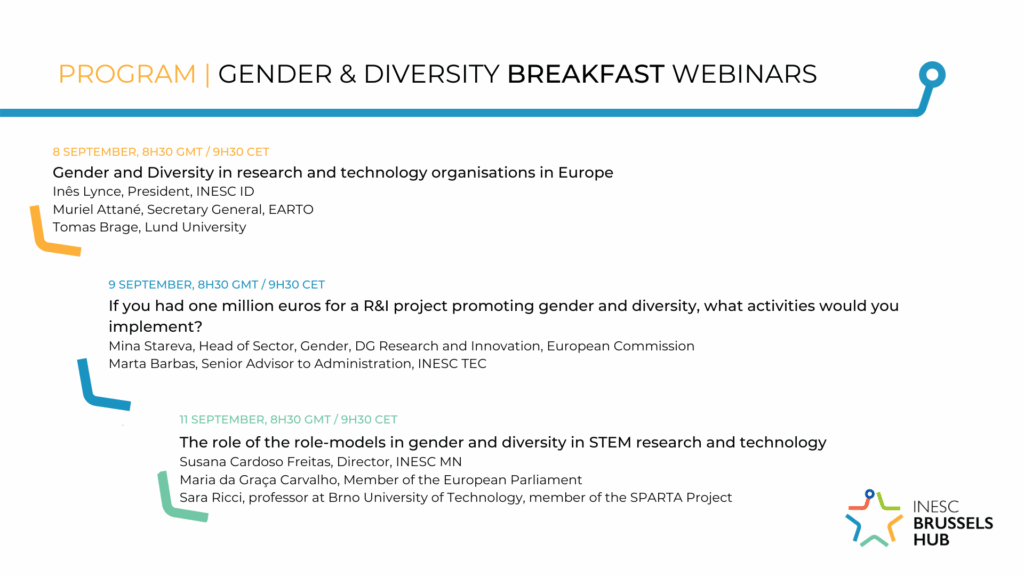
Register here until September 4.
Celebrating INESC’s 40th anniversary, a special programme with three sessions is available to the general public.
Next session will take place on October 8th, at 5 p.m., at Auditório II of Fundação Calouste Gulbenkian, Lisbon, and will be made available online streaming.
Event is free, but a registration is required in order to receive a link.
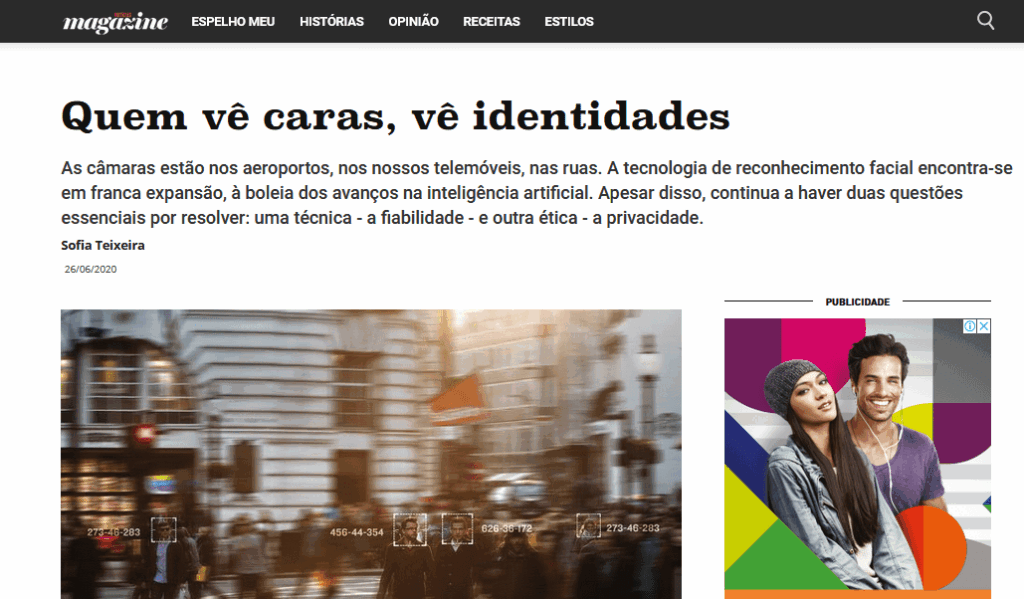
INESC-ID’s researcher Ricardo Chaves was interviewed for ‘Notícias Magazine’ about facial recognition technology.
This brief interview is focused on the rise of facial recognition technology together with artificial intelligence, and highlights two very important questions: reliability and privacy.
Read the article here.

INESC-ID’s researcher Leonel Sousa recently published in ERCIM News, titled “Can 5G and Machine Learning Replace the Global Positioning System?”.
The article is co-written with João Gante and Gabriel Falcão, from the University of Coimbra.
Read the article here.
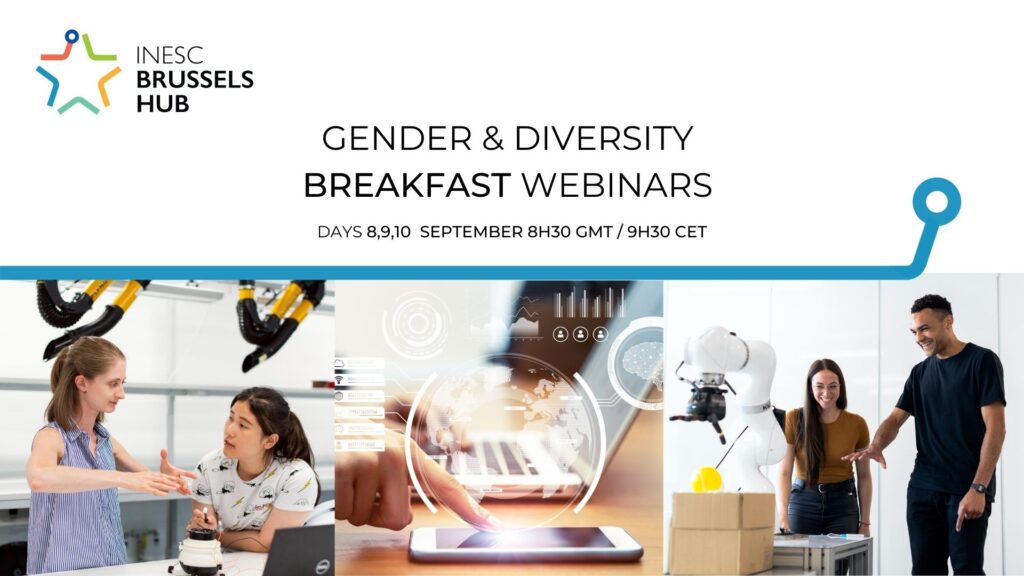
The futures Gender&Diversity breakfast webinars, organized by INESC Brussels Hub will present speakers that will blow up your september breakfasts.
Save the dates!
An EuroHPC Joint Undertaking project has been recently approved. This project was highly ranked among all submitted projects to the 1st EuroHPC call.
The SparCity project aims at creating a supercomputing framework that will provide efficient algorithms and coherent tools specifically designed for maximising the performance and energy efficiency of sparse computations on emerging HPC systems, while also opening up new usage areas for sparse computations in data analytics and deep learning.
To demonstrate the effectiveness, societal impact, and usability of the framework, the SparCity project will enhance the computing scale and energy efficiency of four challenging real-life applications that come from drastically different domains, namely, computational cardiology, social networks, bioinformatics and autonomous driving. By targeting this collection of challenging applications, SparCity will develop world-class, extreme scale and energy-efficient HPC technologies.
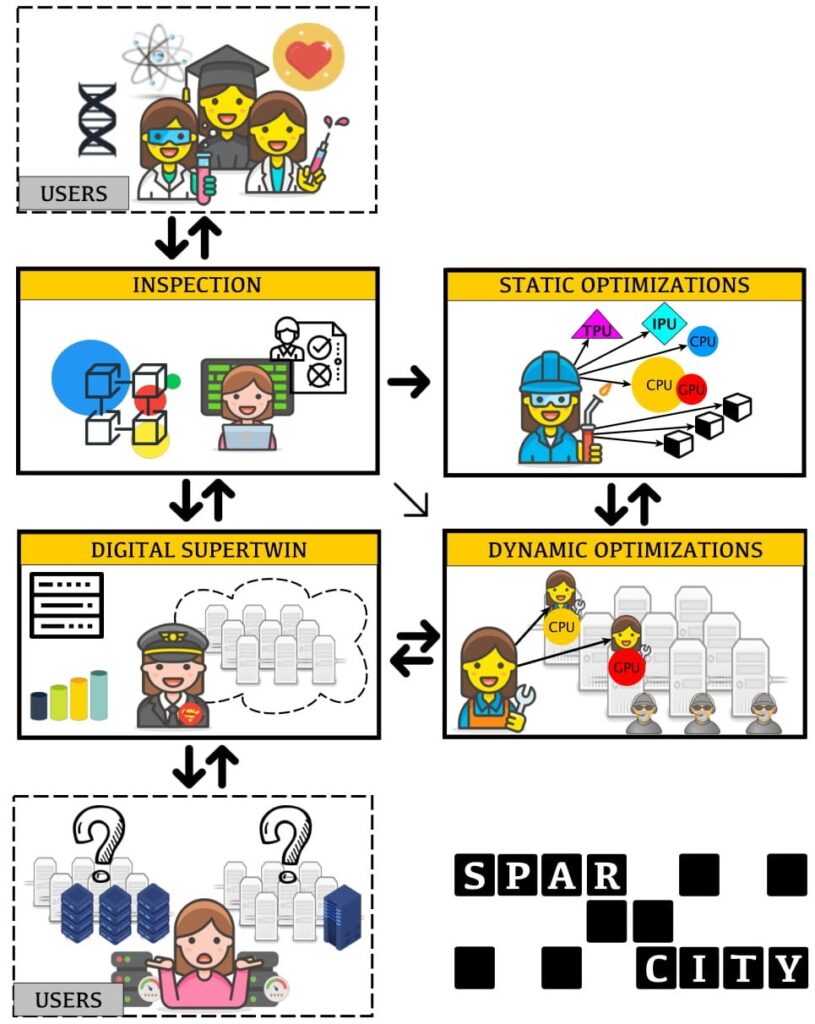
This research project is coordinated at INESC-ID by Leonel Sousa and Aleksandar Ilic, and involves partnerships with Sabanci Universitesi (Turkey), Simula Research Laboratory (Norway), Ludwig-Maximilians-Universitaet Muenchen (Germany), Graphcore AS (Norway). The general coordinator of this project is the KOC University (Turkey).
SparCity major goal is to build a sustainable exascale ecosystem and increasing Europe’s competitiveness.

Leonel Sousa was invited by IEEE (Institute of Electrical and Electronics Engineers) to present a webinar entitled “Unconventional Computer Arithmetic for Emerging Applications and Technologies”.
Click here for more information.
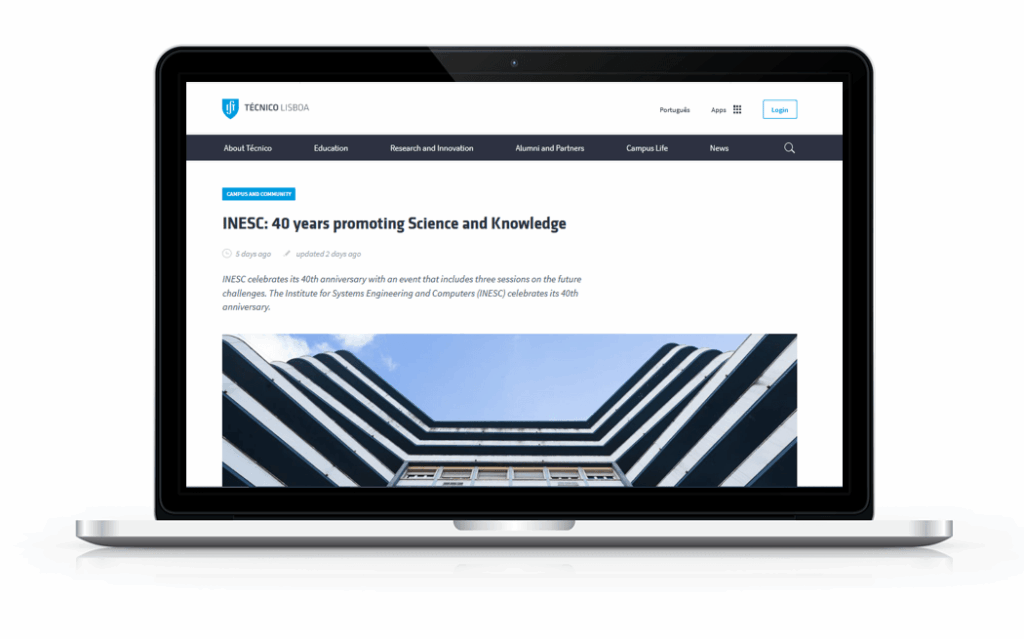
Instituto Superior Técnico went back to 1978 to celebrate INESC’s 40th anniversary.
The article recently published “INESC: 40 years promoting Science and Knowledge”, also includes the testimonials of Professor José Tribolet, founder and President of the Institution, Professor Inês Lynce, President of INESC-ID, Engº Fernando Moreira, President of INESC Innovation and Professor Susana Freitas, co-director of INESC MN.
Read the full article here.