Tag: ATE

  • PRR Projects: Driving the Future of Energy – the Alliance that will change the landscape
    PRR Projects: Driving the Future of Energy – the Alliance that will change the landscape

    Undoubtedly, the biggest challenge facing humankind today is the energy transition. It is urgent that this ever-present topic moves from intentions to real action. This is precisely the aim of the PRR-funded project, Alliance for Energy Transition (ATE), with strong involvement from INESC-ID.

    This collaborative initiative was designed to enhance the competitiveness and resilience of Portugal’s energy sector, positioning the country as a leader in sustainable and digital energy solutions. “It emphasizes how prioritized this area is and the strategic positioning of the country, as it touches on many strategic areas both nationally and internationally—from mobility to consumer services, electrical grids, offshore energy, solar power, and hydrogen,” notes Hugo Morais, a researcher in Sustainable Power Systems and Professor at Técnico.

    Led by Efacec, with a consortium of 80 entities, 13 strategic partners, and a €274 million investment (€157M from PRR), ATE encompasses 16 work packages (WPs), each advancing key areas from smart grids to sustainable mobility and renewable energy integration. “It’s gigantic!” says Hugo.

    This project is so large in scale that a dedicated association was created—Associação Aliança para a Transição Energética—to manage its 60 companies, 14 R&D institutes, six universities, 11 associations, clusters, public entities, and two laboratories.
    “ATE arises from the need to strengthen the competitiveness and resilience of companies in Portugal’s energy sector, with the clear goal of leading decarbonization and driving an effective energy transition. Thus, it becomes essential to create innovative, sustainable products, processes, and services with export potential, covering the entire value chain,” summarizes Rui Lameiras, Head of Product Management at Efacec, in an interview with Jornal Sol.

    INESC-ID in four work packages

    There are six areas of intervention: decarbonization of the energy system, reindustrialization and circular resource use, digitalization of the energy sector, decentralization and democratization of energy, sustainable mobility and industry, and business acceleration in the new economy. INESC-ID plays an essential role in four of the WPs, contributing innovative solutions and technologies aimed at driving both the energy transition and digital transformation of the sector.

    “When we talk about the virtualization of functions, we’re referring to a completely new philosophy in substation development. A substation costs around ten million euros, and what we’re discussing is a complete shift in design philosophy—something that will have an impact five or ten years from now.” – Hugo Morais

    To improve protections within electric grids, INESC-ID is developing solutions for intermittent fault detection, renewable-based systems, and virtualized protection functions—a shift from traditional Intelligent Electronic Devices (IEDs) to virtualized systems that allow for centralized management and reduced installation costs. “When we talk about the virtualization of functions, we’re referring to a completely new philosophy in substation development. A substation costs around ten million euros, and what we’re discussing is a complete shift in design philosophy—something that will have an impact five or ten years from now,” explains Hugo Morais. “This is to show that we have tangible results ready for the near future—a new station, a new concept for mobility management. We’re already entering the commercialization phase of prototype one and two, with the goal of reaching the market within three years,” Hugo adds.

    The project is also working on a flexibility services considering different market architectures that hare available in different countries. Afterwards, new services are being designed and will be available in a near future. “Some things will be important now, while others will be relevant in five or ten years. Many outcomes will emerge from the project,” notes Hugo Morais.
    A significant part of this work results from the collaboration with the Smart Energy Lab. Here, INESC-ID is developing end-user solutions, including cost-effective strategies for electric mobility, battery control, and flexibility services that allow consumers to contribute to grid stability. One ongoing project is the Living Energy platform—a unique tool designed to engage both people and devices. With a user-friendly and visually appealing interface, Living Energy offers real-time data presentation, interactive capabilities, and options for gathering both quantitative and qualitative information.

    No crystal balls

    The platform can be easily adapted to specific needs, allowing for the collection, analysis, and reporting of key indicators, as well as stakeholder engagement through customization options. With more than 50 registered users across the country and a team of engineers and data scientists, it is possible to gather detailed information about new technologies before they are launched on the market—because, as we can read on the website, “we do not trust crystal balls.”

    INESC-ID is also managing the implementation of a platform for digitalizing the energy sector and a support laboratory, essential for accelerating product testing and validation to reach the necessary Technology Readiness Levels (TRL) for commercialization. “The goal is to create a network of laboratories from various entities with multiple capabilities, thus avoiding the need for companies to rely on international laboratories,” explains Rui Lameiras.
    In such a challenging and vast endeavour, continuous training is crucial. INESC-ID focuses on reskilling and upskilling consortium partners, aiming to bolster expertise and adaptability among the professionals involved in ATE projects.
    Other segments of the ATE include solutions for energy communities, with some focused on offshore wind, which is “quite active,” according to Hugo. Other areas include solar energy, the integration of photovoltaic systems in agriculture, and PV integration in ports to support maritime mobility. In total, there will be 45 new products—80% of these destined for the international market—a turnover estimated at €550 million, generating 700 new jobs and avoiding 3.4 million tons of CO₂ emissions.

    The goal is ambitious, as well as the challenge. The moment is now. As ATE continues to unfold, it will not only have a significant impact on Portugal’s energy landscape but also contribute to global efforts toward a more sustainable and interconnected world.


    Text by Sara Sá, Science Writer | Communications and Outreach Office, INESC-ID
    © 2025 INESC-ID. Credit INESC-ID and the author, and link to the original source when sharing or adapting this article.

    Images | © 2024 INESC-ID, ATE

  • INESC-ID’s PRR projects on display at Técnico Innovation Summit

    INESC-ID’s PRR projects on display at Técnico Innovation Summit

    A robot dog greeted visitors at the Técnico Innovation Summit, drawing a heart in the air with its front paws. It charmed everyone, and the research team behind the Sustainable Stoneby Portugal project looked on proudly at their “pet.”

    The first edition of the Técnico Innovation Summit, held on November 4 and 5 at the Técnico Innovation Center during the PhD Open Days, showcased projects with significant economic impact, particularly those funded through Portugal’s Recovery and Resilience Plan (PRR).

    INESC-ID was well-represented with four of its five projects:

    • Accelerat.ai: driving digital transformation in Portugal’s public and private sectors through technologies like conversational systems for the national health helpline SNS24;
    • Centre for Responsible AI (CRAI): developing fair, explainable, and sustainable AI solutions;
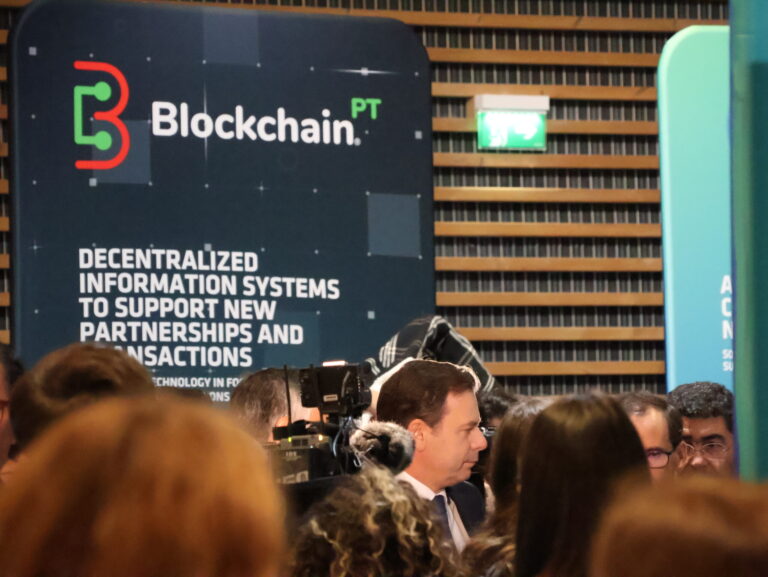
    • Blockchain.pt: establishing a national blockchain network to position Portugal as a global leader in blockchain innovation;
    • Alliance for Energy Transition (ATE): fostering an ecosystem for energy transition and decarbonization.

    Over the two-day event, numerous visitors passed through the venue, including students, entrepreneurs, researchers, and government representatives who also attended the nomination ceremony for the 21 new members of the National Council for Science, Technology, and Innovation (CNCTI).

    “We were visited by Pedro Dominguinhos, President of the National Monitoring Committee for PRR, and Carla Branco Santos from the Executive Committee of IAPMEI,” shared Rubén Solera-Ureña, a researcher in Human Language Technologies involved in the Accelerat.ai project.

    During their visit to the expo site, Prime Minister Luís Montenegro and his team visited various booths, including that of CRAI. Here, researchers demonstrated AI products developed under the project, such as a home physical therapy platform, a communication solution for ALS patients, and a platform to help hospital doctors automate administrative tasks.

    Images | © 2024 INESC-ID