Tag: Halo

  • PRR Projects: Fair, Explainable, and Sustainable. INESC-ID is leading Responsible AI with the CRAI Project
    PRR Projects: Fair, Explainable, and Sustainable. INESC-ID is leading Responsible AI with the CRAI Project

    Luís Oliveira lost his ability to speak due to Amyotrophic Lateral Sclerosis (ALS) in early 2023. However, in May 2024, he made his voice heard around the world. Luís, who sadly passed away in the meantime, made an historic appearance at the United Nations summit AI for Good, becoming the first ALS patient to demonstrate the use of Halo. This groundbreaking technology, developed under the PRR-funded Centre for Responsible AI (CRAI) project, enables communication without speech or typing, by combining Generative AI with a non-invasive neural interface that translates bioelectrical signal patterns into language.

    Halo, developed by Unbabel—the leading partner in this large-scale initiative—is perhaps the most visible innovation to emerge from the CRAI consortium. With €51 million in funding, CRAI aims to promote fair, transparent, eco-friendly, and trustworthy Artificial Intelligence. The initiative is structured around three key areas. Technology developers, including startups and companies focused on product development, ensure AI research directly supports real-world applications, such as Unbabel’s Halo. Fundamental research, led by top institutions like INESC-ID, Instituto de Telecomunicações, and the Champalimaud Foundation, drives cutting-edge AI advancements. Industry and healthcare adopters, such as Hospital de São João, Bial, and Luz Saúde, integrate AI solutions into their operations, ensuring broad societal impact. In total, CRAI brings together 10 startups, two unicorns, a law firm, five industry leaders, and eight research centers.

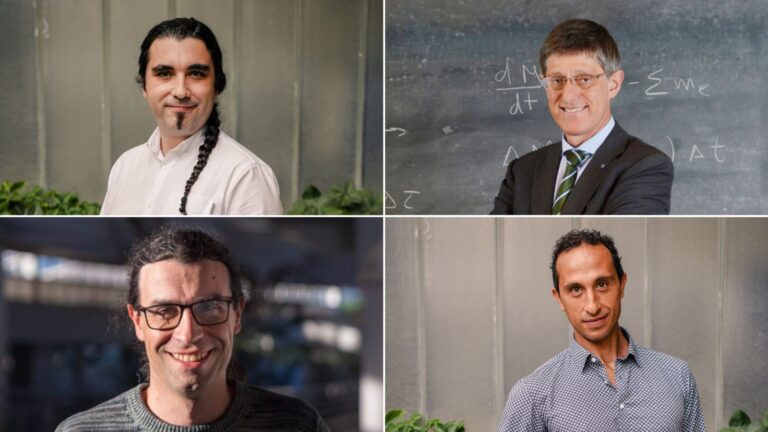
    At INESC-ID, four different research teams—led by Bruno Martins, Arlindo Oliveira, Rui Prada, and Paolo Romano—collaborate on various aspects of the project, with Responsible AI as a core pillar. Alongside this vision of connecting with companies, the teams are developing highly applied solutions.

    “CRAI is built on three fundamental principles: fairness, ensuring no discrimination towards groups of people; understandability and explainability, making AI systems interpretable and their decision-making processes transparent; and sustainability, ensuring computational feasibility and reducing energy consumption without compromising performance.”  — Bruno Martins

    INESC-ID’s expertise in Natural Language Processing (NLP) and dialogue systems has for instance been instrumental in supporting projects like Unbabel Halo. Other key initiatives focus on legal or clinical NLP, which are critical components of the Affine product being developed by NeuralShift, with its focus on streamlining legal workflows, or the automated medical record systems developed in collaboration with Priberam’s PCARE initiative.

    Bruno Martins, from Human Language Technologies research area and the coordinator of INESC-ID participation at the project, explains that CRAI is built on three fundamental principles: “fairness, ensuring no discrimination towards groups of people; understandability and explainability, making AI systems interpretable and their decision-making processes transparent; and sustainability, ensuring computational feasibility and reducing energy consumption without compromising performance.”

    The team led by Paolo Romano adopts a three-pronged approach to enhance AI efficiency and scalability, focusing on system-level optimization, cloud-level optimization, and self-adaptation. Meanwhile, research by the team coordinated by Rui Prada, on Social Artificial Intelligence and Social Robotics, aims to develop AI that interacts naturally and responsibly with humans, fostering a symbiotic relationship between people and technology. And Arlindo Oliveira’s team aims to strike a balance between safeguarding data privacy and security while leveraging customer insights in a competitive landscape.

    CRAI’s main objectives include advancing fundamental research in Responsible AI, developing products and services that apply Responsible AI principles to generate economic impact, attracting, training, and retaining world-class talent, and promoting education and awareness through initiatives such as the Responsible AI Forum. These efforts are already translating into real-world solutions, enhancing accessibility, improving healthcare processes, and fostering ethical AI adoption across industries.


    Text by Sara Sá, Science Writer | Communications and Outreach Office, INESC-ID
    © 2025 INESC-ID. Credit INESC-ID and the author, with a link to the original source, when sharing or adapting this article.

    Images | © 2025 INESC-ID, Técnico, Unbabel

  • Restoring Voices: Transformative ALS communication technology developed under CRAI wins innovation award

    Restoring Voices: Transformative ALS communication technology developed under CRAI wins innovation award

    Most of us are familiar with the synthetic voice that the famous physicist Stephen Hawking used to communicate. Suffering for many decades from the debilitating disease amyotrophic lateral sclerosis (ALS), Hawking continued working, unravelling the mysteries of black holes and sharing his insights in books and public appearances. Despite the misfortune of living with such a severe condition, he had access to cutting-edge technology that allowed him to remain professionally and socially active. Unfortunately, not all patients share this opportunity.

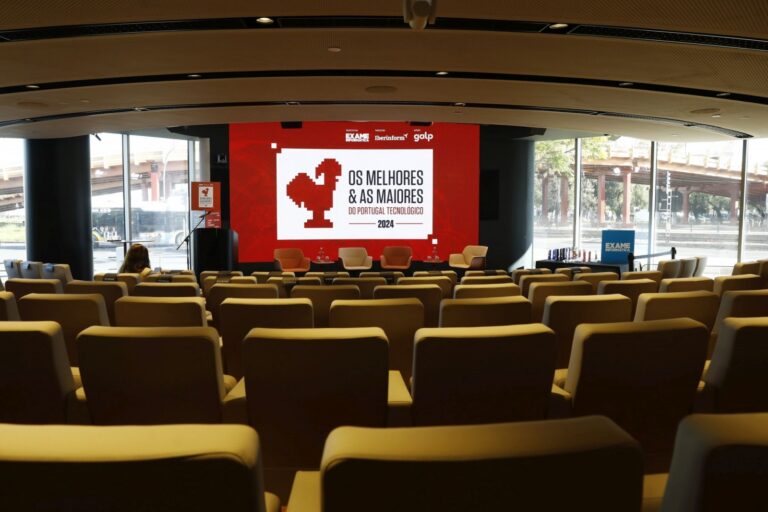
    Under the PRR-funded project Center for Responsible AI, in which INESC-ID is a key participant, Unbabel has developed Halo—a ground-breaking technology designed to restore the ability to communicate for patients living with ALS and similar conditions. This innovative device won the Prémio Inovação – Pedro Oliveira, awarded by Exame Informática during the “Os Melhores & As Maiores do Portugal Tecnológico 2024” ceremony.

    As described, “the solution consists of a muscle signal reader—essentially a band that can be worn on the head, which uses electromyography to detect fine muscle contractions—and Artificial Intelligence software that incorporates information about the user, such as personality, preferences, or their surrounding environment. Based on this system, which is continuously ‘fed’ with data from both the user and those around them, a persona is created. This persona generates response suggestions to questions posed to the user, which are then presented in audio form. The user selects the most appropriate response by moving their forehead muscles. Since the system converts text to speech for a more natural interaction, it is possible to use the patient’s own voice—either pre-recorded before the progression of the disease or retrieved from older audio recordings.” So that more patients may continue to have a voice.

    Every year, Exame Informática honors the best advancements in Portugal’s scientific and technological fields. As senior AI researcher at Unbabel Labs Catarina Farinha remarked, “with more recognition comes more responsibility to keep pushing and doing better.”