Tag: Innovation

  • In the Media: Fábio Passos writes on Jornal i about organ-on-chip technology that could revolutionise modern medicine
    In the Media: Fábio Passos writes on Jornal i about organ-on-chip technology that could revolutionise modern medicine

    Can technology replace animal testing in drug development?

    A new article, entitled “Integrated circuits that emulate human organs: Organs-on-chip” (“Circuitos integrados que simulam órgãos humanos: Órgãos-em-chip”) was recently published by INESC-ID researcher, in the area of Nano-Electronic Circuits and Systems, Fábio Passos, on Portuguese newspaper, “Jornal i”.

    Traditionally, ensuring a drug’s safety for human consumption, requires extensive animal testing. This is not only a slow and costly process that sometimes causes animal suffering, but also often offers unreliable results for humans, resulting in undesirable side effects and failed tests. 

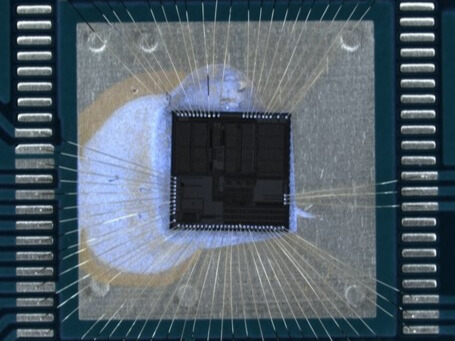
    According to Fábio Passos, the Organ-on-chip (OOC) technology – a groundbreaking innovation that uses integrated circuits to mimic a human organ in a controlled microenvironment – could be the solution for this problem, and “the application of this technology promises to revolutionise drug development, disease research and personalised medicine, while reducing dependence on animal testing”.

    The creation of OOC systems is, however, no small feat. Their composition is made of channels lined with living cells that mimic the structures and functions of specific organs, requiring the integration of multiple complex miniaturised components. The UNLOOC research project , which includes 51 organisations from 10 European countries, intends to tackle these technical challenges. In Portugal, partners like INESC-ID, INESC-MN, Instituto Superior Técnico, and Silicon Gate are developing analog integrated circuits for precise control and real-time monitoring of these systems.

    Read the full article here (in Portuguese).

  • INESC-ID Sparks Innovation at ElectroDay 2024

    INESC-ID Sparks Innovation at ElectroDay 2024

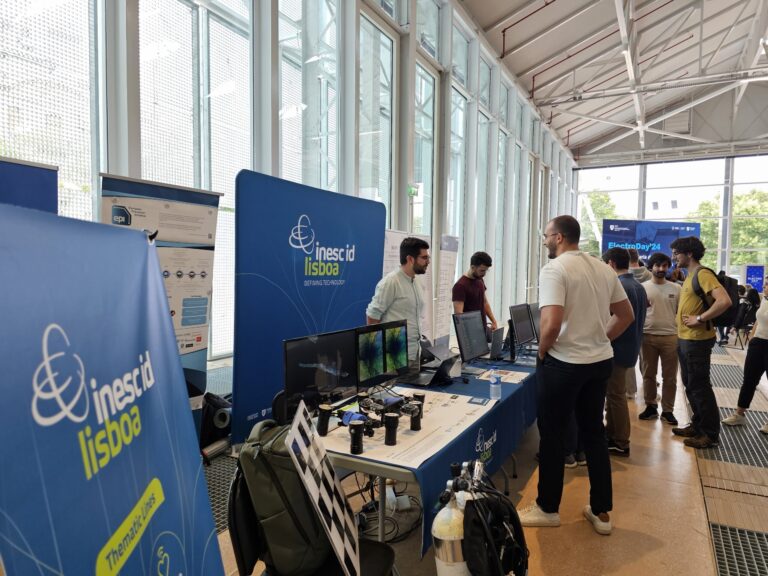
    Last Saturday, INESC-ID marked its presence at ElectroDay 2024, held at the Técnico Innovation Center (TIC), with its researchers  enthusiastically presenting several projects in the field of Electrical and Computer Engineering.

    In a venue completely packed with engineering enthusiasts, students, families and friends, the INESC-ID stand showcased projects at different stages of development, such as the “3D-CAVE Project”, presented by Nuno Neves, André Costa, Nuno Roma and Pedro Tomás (HPCAS); “European Processor Initiative (EPI)”, presented by Pedro Tomás, Nuno Neves and Tiago Rocha (HPCAS); “Cache-aware Roofline Model: HPC impact in EU projects”, presented by Aleksandar Ilic, José Morgado and Alexandre Rodrigues (HPCAS); “Embedded systems projects at INESC-ID”, presented by Gonçalo Tavares, Ruben Afonso and Fabian Näf (NCES); and “Shift2DC – Revolutionizing the way we use Electricity”, presented by Hugo Morais (SPS) and Guilherme Paraíso (GESC).

    The event provided a unique opportunity to highlight our researchers’ work and share their enthusiasm with both experts and curious attendees. Many visitors stopped by our stand to ask questions, listen to our researchers, and watch their demonstrations, supporting INESC-ID’s mission of expanding its science communication initiatives.

    ElectroDay is an initiative of Técnico’s Department of Electrical and Computer Engineering (DEEC). The 2024 edition featured a diverse program with participation from various institutes, research centers, and student groups, showcasing their work and projects in fields such as electronics, computer science, IT, telecoms, and aerospace. Additionally, it included the ‘ElectroCap Demo Day,’ the final public presentation and prize awarding of the ElectroCap program, where 32 student teams organized to solve real engineering problems, aiming to integrate as many concepts learned during the first cycle as possible.

    Learn more about ElectroDay here.

    Images | © 2024 INESC-ID

  • Key Insights from the “Leadership in Research and Innovation in the Age of AI” event

    Key Insights from the “Leadership in Research and Innovation in the Age of AI” event

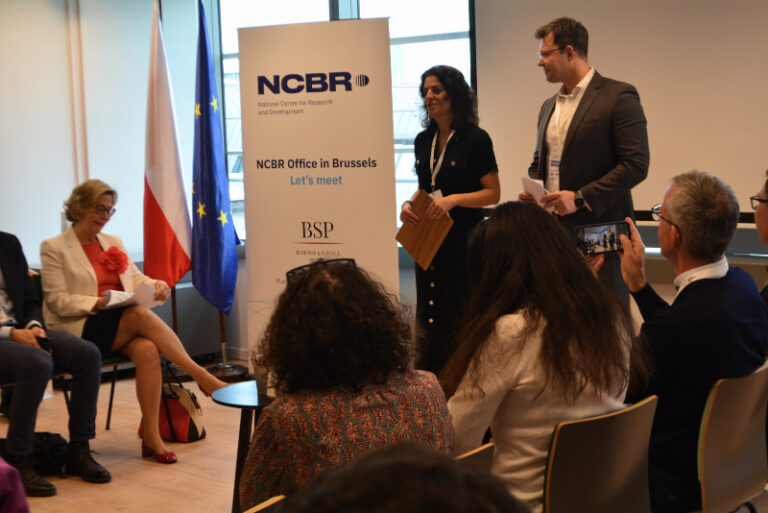
    “AI-driven science extends beyond academia, fostering both innovation and economic growth,” declared the Deputy Director-General for Research and Innovation, Signe Ratso, while participating in the event “Leadership in Research and Innovation in the Age of AI”, an initiative of INESC Brussels HUB, co-organized with the European Commission and the NCBR Office in Brussels.

    Over 60 leading R&D administrators, managers, researchers, and policymakers gathered in Brussels, on June 5 and 6, to discuss this crucial topic in a workshop format, sharing insights and developing strategies to face the challenges posed by AI. INESC-ID President, Inês Lynce, who was one of the six INESC-ID community members participating in the event, emphasized the “diversity of the attendees” and the “strong expertise in public policies some of them possess.”

    The meeting was also an opportunity to discuss the EU strategy on AI since 2018 and initiatives like GENAI4EU and AI Factories and the “Living guidelines on the responsible use of generative AI in research”, as presented by Liviy Stirbat, Head of Unit for AI in Science in the DG for Research and Innovation at the European Commission. From the companies’ side, Ondrej Socuvka, Senior EU Public Policy and Government Affairs Manager at Google EU, shared how Google scientists are pushing AI’s boundaries responsibly.

    “Listening to different perspectives concerning the use of AI in research institutions, in order to help us work better and improve the way they function, is what I cherish the most from the two days with the Brussels Hub,” said Rui Prada, INESC-ID researcher within the Artificial Intelligence for People and Society research area. “These events give us the opportunity to reflect on subjects that we often do not have time to consider in our daily lives.”

    Inês Lynce also stressed the relevance of these immersive experiences: “It forces you to leave your comfort zone and think about the future of the institution and how we can make a difference.”

    Images | © 2024 INESC Brussels HUB