Tag: Megatrends

  • INESC Lisboa Annual Meeting keynote speaker, Dejan Milojicic, on Technology Megatrends and the role of AI as an equalizer
    INESC Lisboa Annual Meeting keynote speaker, Dejan Milojicic, on Technology Megatrends and the role of AI as an equalizer

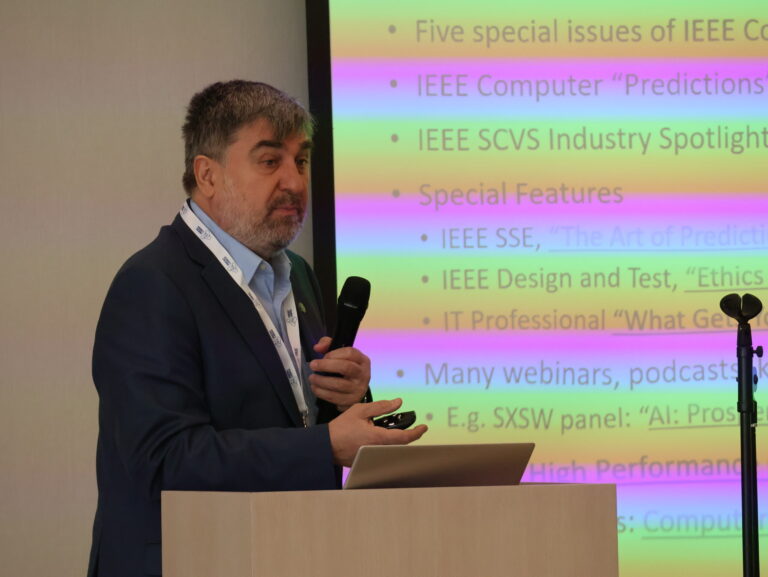
    It took Dejan Milojicic more than twenty years to understand the way of life in the United States. “Now I am at peace”, he shares, before delivering the keynote lecture at INESC Lisboa Annual Meeting. For the last 15 years, the HPE Fellow and VP, and former President of the IEEE Computer Society, has been involved in the production of the IEEE Technology Megatrends Report, which identifies the technologies with the greatest opportunities and potential impact for the future. Compiled annually by 50 experts, the report draws data from three different sources: the United States Patent Office, Google and IEEE digital library. The meticulous work pays off, he believes, since “it appeals to people.”

    A megatrend influences the evolution of multiple trends, making it crucial to understand these overarching patterns—it is both the sum of individual trends and a guiding force, often shaping perceptions that then influence its components. A megatrend impacts multiple factors—technological, economic, social, and ecological, he explains.

    This year’s report identifies three major areas of focus: Sustainability, Artificial General Intelligence and Digital Transformation – topics that were discussed in the meeting’s parallel sessions. Under these three topics we can find wearables and computer brain interface, digital twins, space technologies and also energy storage and autonomous technologies.  For Milojicic, the report is followed by the industry – timely productization of near-horizon technologies – governments – early regulation of technologies that cause concern – academia – globally train trainers for key megatrends – and professional organizations – help develop standards suited for increased speed of tech introduction. Of course, sometimes there are “strong mistakes”, such as the overemphasis on combating misinformation in the 2023 report. But, as he says, there are factors that can disrupt everything—war, COVID—but this shouldn’t stop us from making predictions.

    Discussing the dual nature of technology, Milojicic emphasizes that “any technology can be an enabler or a weapon,” which underscores the need for careful governance. Governments play a crucial role, he noted, by creating regulations that manage risks while fostering innovation. This is particularly relevant in fields like AI, where rapid advances can either reduce inequalities (AI as an equalizer) or exacerbate them if left unchecked. For this reason, Milojicic stresses the importance of regulatory frameworks that balance the benefits of technological adoption with ethical considerations and societal impacts.

    Companies and the educational system also should have a role to play on this. “All schools should forbid using AI for exams or to write articles”, he defends, giving the example of some companies where people are not allowed to use AI, at least external tools for confidentiality concerns.

    Looking at the trends identified in the 2024 report—sustainability, artificial general intelligence (AGI), and digital transformation—Milojicic describes these as “richness-blind” trends, meaning they offer potential for widespread adoption without requiring significant infrastructural changes. He draws on the example of mobile phones, which transformed communication in regions like India without the extensive infrastructure overhaul required in Western countries. Similarly, some developing nations could be ideal environments for testing new megatrends related to sustainability, AI, and digital transformation, potentially helping to bridge inequalities.

    On his way to visit his hometown, Belgrade, Serbia, Milojicic notes that he feels at home wherever he goes in Europe.

    Text by Sara Sá, Science Writer | Communications and Outreach Office, INESC-ID / © 2024 INESC-ID

    Images | © 2024 INESC-ID

  • INESC Lisboa Annual Meeting: A Day of Reflection, Recognition, and Future Directions in Research

    INESC Lisboa Annual Meeting: A Day of Reflection, Recognition, and Future Directions in Research

    “It is an important event for the entire community, especially for young researchers. An opportunity to think about things we don’t usually consider,” said Arlindo Oliveira, INESC-ID researcher and President of INESC, at the closing session of the INESC Lisboa meeting, held on Friday, October 25. His words encapsulate the spirit of this gathering, now in its second edition, bringing together researchers from the three Lisbon-based INESC institutions—INESC-ID, INOV, and INESC MN.

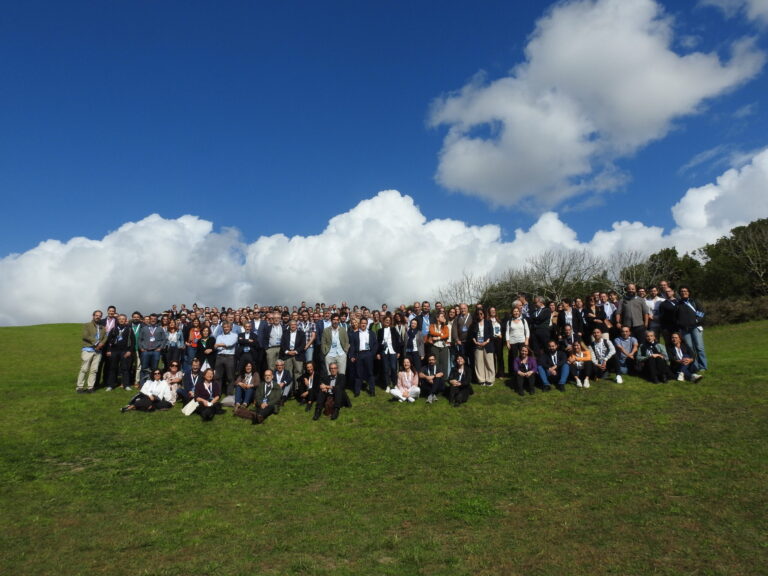
    Under a bright autumn sun, around 300 people spent the day at the Crowne Plaza Hotel in Costa da Caparica, just across the Tagus River, engaging in discussions on career paths, institutional futures, and today’s scientific challenges. The day began with a warm welcome from INESC Lisboa President, Leonel Sousa, who expressed satisfaction with the success of this second edition and the impressive turnout.

    INESC-ID President, Inês Lynce, followed by presenting key statistics for INESC-ID: 102 integrated researchers, 64 collaborators, and 140 PhD students. She also introduced planned improvements for the institute’s management system, proudly noting that INESC-ID was the largest institute to achieve a maximum rating in the latest Fundação para a Ciência e Tecnologia evaluation. “The strength of INESC-ID lies in its foundations; our greatest asset is the initiative of our researchers. It’s up to the management to motivate people,” Inês concluded.

    INOV President Fernando Moreira shared insights into the institute’s history, tracing its origins back to 1980 and the centres for technology transfer. After these institutional updates, the audience turned to a talk from Dejan Milojicic, Senior Research Manager in the Strategy and Innovation Office at HP and former President of the IEEE Computer Society. Dejan, who has contributed to the annual Megatrends report for 15 years alongside 49 other distinguished experts, discussed the report’s role in guiding governments, research institutions, and industry. He noted, however, that unpredictable factors like war or COVID-19 can disrupt even the best projections. “Even so, we shouldn’t let that deter us from making predictions,” he asserted.

    Drawing on trends from the 2024 Megatrends document, participants then broke into parallel sessions to explore three major areas of evolving technology: Sustainability, Artificial General Intelligence, and Digital Transformation. Attendees were randomly assigned to groups to dive into these topics further.

    The afternoon included sessions organized by each institution. For INESC-ID, João Paulo Carvalho, Board Member responsible for Human Resources, provided an in-depth profile of INESC-ID members, including an exciting preview of the new building planned for the institute. Nuno Roma, also a Board Member, presented the most relevant numbers of the financial situation of our Institute.

    Brief presentations from Sílvia Castro, Head of the Innovation and Management Office, Sandra Aresta, from Knowledge and Technology Transfer, Rodrigo Abreu, Communications and Outreach Office, and Vanda Fidalgo, Human Resources Manager, further enriched the day’s discussions. In a parallel session, and with notorious satisfaction from the participants, occurred the first meeting of the INESC-ID PhD. students.

    The eagerly awaited announcement of awards was led by the researcher Rui Prada, from the AI for People and Society, who presented the winners of the Young Researcher category, Alessandro Gianola, of the PhD Student, Rafael Belchior, and the Researcher category, Hugo Morais.

    The day concluded with a talk by Maria Mota, President and CEO of the newly formed GIMM—a research institute created from the merger of the renowned IGC and IMM institutes. Maria, a scientist with over two decades of experience in malaria research, shared the story of GIMM’s foundation, mission, operational approach, and future directions for research in biology and medical care. Arlindo Oliveira then closed the event, expressing his appreciation for this initiative.

    Text by Sara Sá, Science Writer | Communications and Outreach Office, INESC-ID / © 2024 INESC-ID

    Images | © 2024 INESC-ID and INOV