-
A Growing Team and Renewed Energy: INESC‑ID at Tejo Run 2026
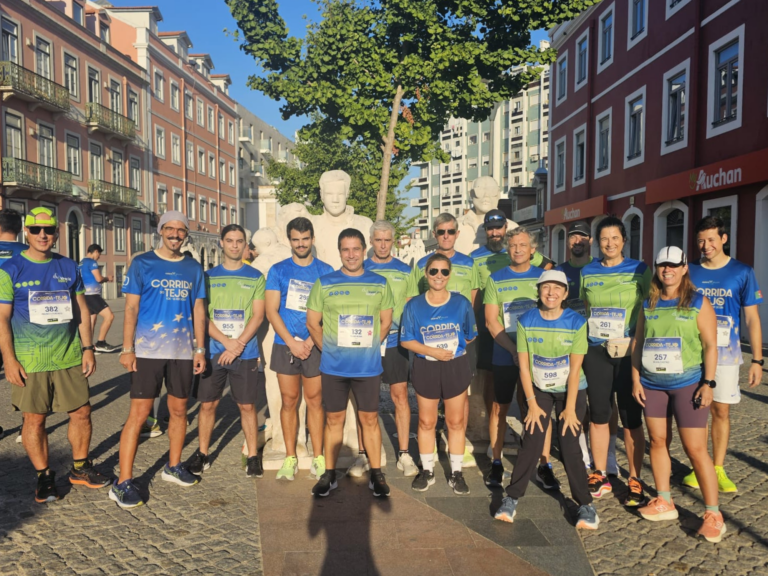
The INESC‑ID team returned to the Tejo Run with renewed energy and an even larger group, confirming the enthusiasm that last year’s participation had already made clear. Gathering near Estação de Algés, the team prepared for the challenge ahead, taking a moment first to register the occasion with a group photo. Once the run began, the pace naturally diversified, with some participants seting off with determined speed, while others opted for a steady power‑walk. Throughout the course, the blue and green INESC‑ID t‑shirts, proudly displaying the “Powered by Research” motto, stood out in the crowd.
read more › -
“Vencer o Adamastor” Award – 5th Edition
Applications are open for the 5th edition of the "Vencer o Adamastor" ("Beating the Adamastor") Award, an initiative by INESC and Público to recognise innovative work by young scientists, developed in Portugal, in the fields of Information and Communications Technology (ICT), including electrical engineering and computation.
read more › -
INESC-ID joins DEI to welcome the bachelor’s and master’s students in Computer Science and Engineering
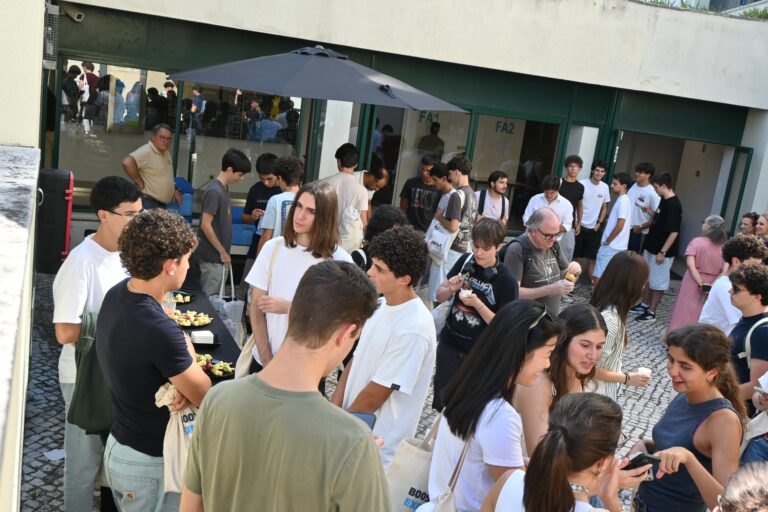
To mark the beginning of the academic year, the Departamento de Engenharia Informática (DEI) of Instituto Superior Técnico hosted a welcome session for the incoming students of the bachelor’s degree in computer science and engineering (LEIC) and the master’s degree in the same field (MEIC). As one of Técnico’s research units, INESC-ID joined these sessions to introduce the institute to the newcomers, engaging early with potential members of its research community. The events took place at Campus Alameda on September 2 and continued the following day at Campus Oeiras, marking the first contact many of these students will have with the research environment.
read more › -
Technical studies by INESC‑ID inform Portugal’s Energy Storage Strategy (ENAE)
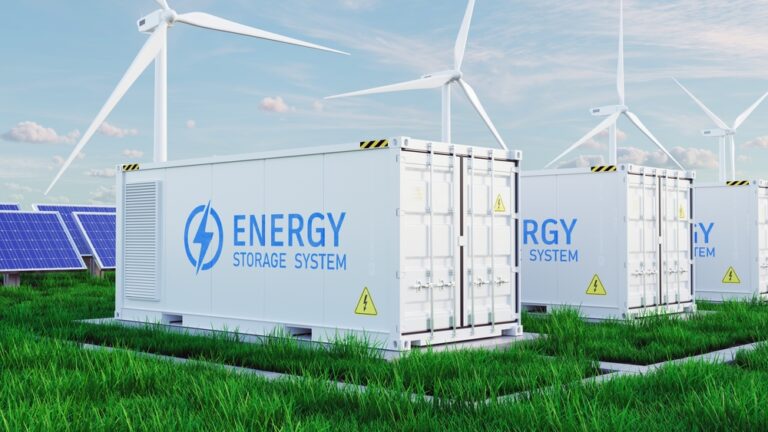
Portugal has opened the public consultation for its National Energy Storage Strategy (ENAE), presenting a roadmap for the expansion of electricity storage capacity through 2040. At the core of the proposal is an Action Plan informed by technical studies carried out by INESC‑ID, INESC TEC and IN+, which provide the scientific basis for the measures now under discussion. According to the national government, the strategy aims to reach 6.9 GW of installed storage capacity by 2030 and 9.76 GW by 2040.
read more › -
FLoC 2026: The world’s biggest logic conference just wrapped up in Lisbon
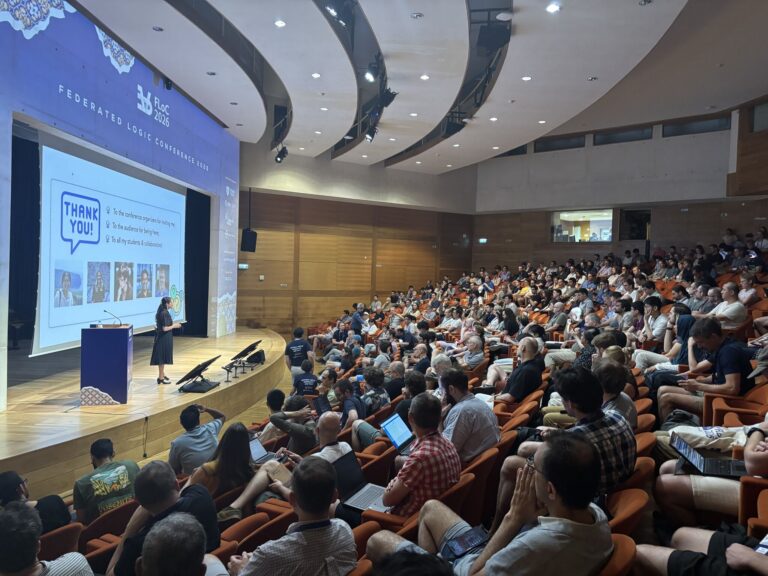
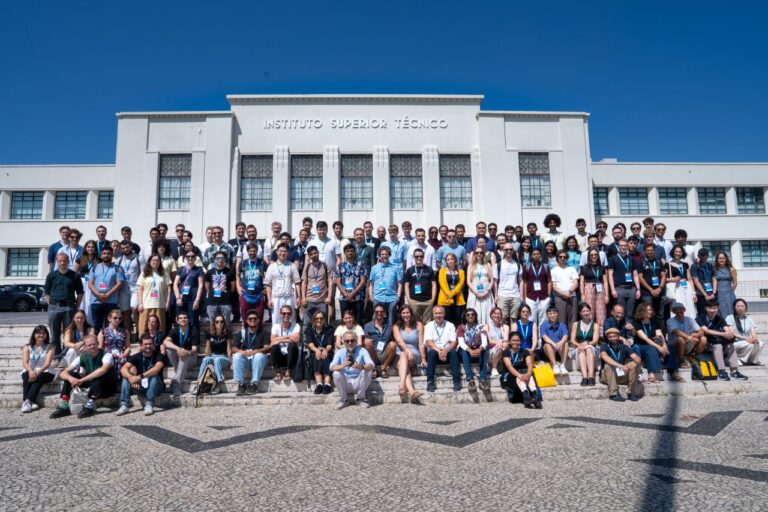
The 2026 edition of the Federated Logic Conference (FLoC) came to a close in Lisbon on 29 July, following two weeks that brought together over 2100 participants from 70 countries across ten conferences, 86 workshops, and two summer schools. Co-organised by Instituto Superior Técnico and INESC-ID, this was the first time FLoC has been held in Portugal, and the ninth edition of the conference since its founding in 1996.
read more › -
INESC-ID Connects Students and Industry at ELLIS Doctoral Symposium 2026
Last week, INESC-ID helped host the ELLIS Doctoral Symposium 2026 (EDS2026), held at Instituto Superior Técnico under the theme Trustworthy AI. The four-day event (27–30 July) was organised by ELLIS Unit Lisbon — a partnership between Instituto Superior Técnico, INESC-ID, the Institute for Systems and Robotics (ISR-Lisboa) and Instituto de Telecomunicações — and brought together more than 100 PhD students, researchers and industry experts from across Europe to explore reliable, safe and adaptable Artificial Intelligence (AI) systems.
read more › -
INESC-ID Advisory Board visit: a day of institutional dialogue and exchange
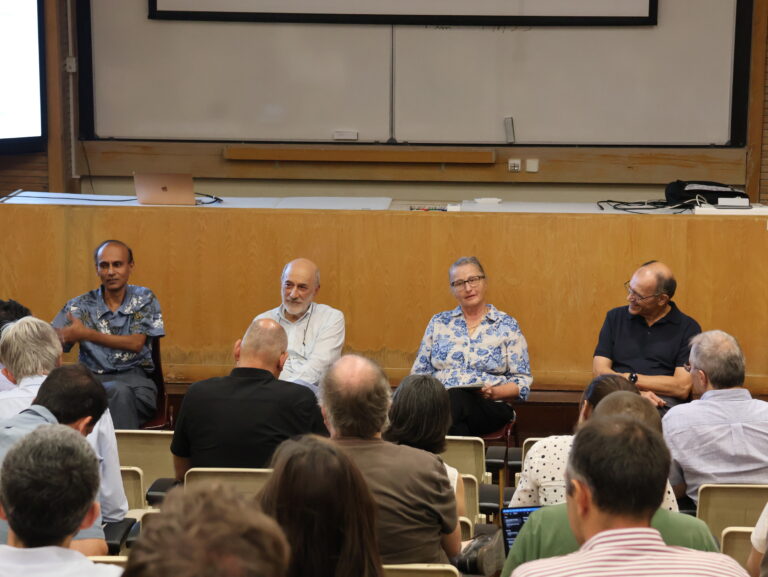
On 3 July, INESC-ID welcomed members of its Advisory Board for an on-site visit to the institute, the first since November 2022.
read more ›