-
EPI successfully completes the first European processor
The European Processor Initiative (EPI) project has achieved a milestone for Europe’s digital autonomy with the development of the first European processor. Among the many teams involved, the Portuguese contribution was led by researchers from INESC‑ID.
read more › -
Technical studies by INESC‑ID inform Portugal’s Energy Storage Strategy (ENAE)
Portugal has opened the public consultation for its National Energy Storage Strategy (ENAE), presenting a roadmap for the expansion of electricity storage capacity through 2040. At the core of the proposal is an Action Plan informed by technical studies carried out by INESC‑ID, INESC TEC and IN+, which provide the scientific basis for the measures now under discussion. According to the national government, the strategy aims to reach 6.9 GW of installed storage capacity by 2030 and 9.76 GW by 2040.
read more › -
INESC-ID gets new projects approved in three different FCT calls
INESC‑ID recently saw four of its proposals approved by Fundação para a Ciência e a Tecnologia (FCT), across three competitive calls that reinforce the institute’s role in national and international research initiatives.
read more › -
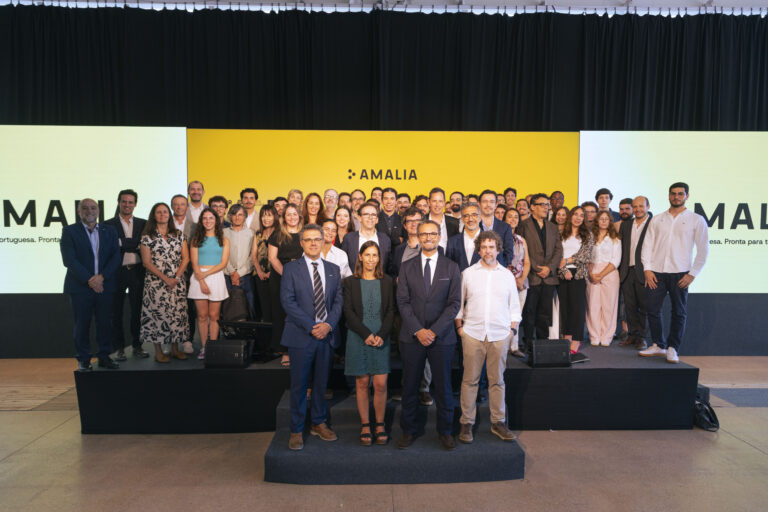
AMALIA was officially launched and is now ready for open use
The AMALIA (Automatic Multimodal Language Assistant with Artificial Intelligence) was officially presented on 1 July at Técnico Innovation Center, a ceremony attended by INESC-ID, as part of the research team. The presentation was met with very positive feedback and a clear recognition of the work that was developed to create AMALIA.
read more › -
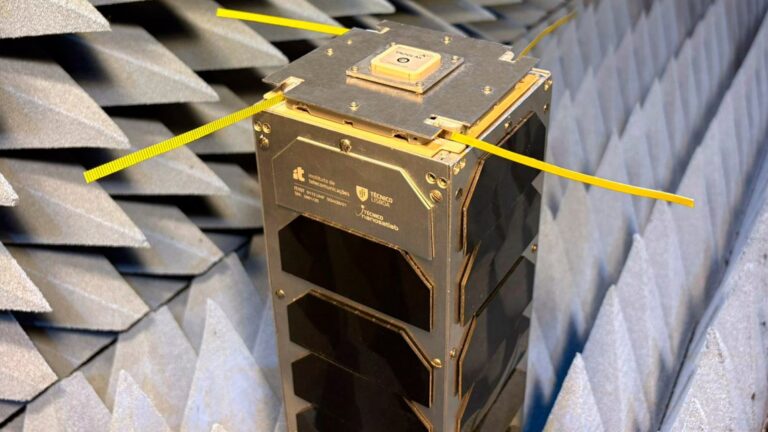
Making their way across the universe: two space missions to join ISTSat-1
After two years in orbit, the ISTSat-1 remains fully operational and is now expecting company. Two missions are being prepared by IST NanoSatLab, in which INESC-ID participates, and set to join the first Portuguese university nanosatellite, with one of them scheduled to fly as early as this year.
read more › -
“Evaluating ML: When will we stop fooling ourselves?”, the second INESC-ID Distinguished Lecture
Following a successful first session, the second INESC-ID Distinguished Lecture was held last week, on 2 July, at Instituto Superior Técnico featuring Professor Ricardo Baeza-Yates from KTH Royal Institute of Technology, Universitat Pompeu Fabra and University of Chile.
read more › -
INESC-ID joins ADRA, the European AI, Data and Robotics Association
INESC-ID has officially joined the AI, Data and Robotics Association (ADRA) as a Full Member, deepening its engagement with Europe's AI, Data and Robotics community.
read more › -
INESC-ID secures two AI grants from CMU Portugal and UT Austin Portugal: improving LLM code generation and humanoid domestic robots
INESC-ID has been awarded two research grants under the 2025 exploratory project calls of the CMU Portugal and UT Austin Portugal programmes, funded by Fundação para a Ciência e a Tecnologia (FCT). one focused on making LLM-generated code more reliable, the other on enabling humanoid robots to reason and communicate naturally with humans.
read more › -
INESC-ID awarded €27.2 Million to Establish the Sustainable Artificial Intelligence Laboratory (SAIL) Centre of Excellence
Led by INESC-ID, the Sustainable Artificial Intelligence Laboratory (SAIL) will be a transformative project that will upgrade INESC-ID into a world-class Centre of Excellence (CoE) dedicated to the development of state-of-the-art, sustainable, and trustworthy Artificial Intelligence. To achieve its goals, INESC-ID is teaming up with two of Europe’s leading AI institutions: the Max Planck Institute for Software Systems (MPI-SWS) and the German Research Center for Artificial Intelligence (DFKI).
read more ›