-
10th Current/OS Plenary hosted by INESC-ID and Shift2DC in Lisbon
From 27 to 30 January 120 experts from 30 countries gathered for the 10th Current/OS Plenary, hosted by INESC-ID and the Shift2DC project, at Instituto Superior Técnico University of Lisbon.
read more › -
“Become ISC2 Certified in Cybersecurity”, new book published by Paulo Carreira
Paulo Carreira, INESC-ID researcher in Information & Decision Support Systems and Associate Professor at Instituto Superior Técnico Universidade de Lisboa, has recently published a book entitled “Become ISC2 Certified in Cybersecurity”, co-written with Andreé Miranda.
read more › -
In the Media: Radios, journeys to the city and the Faraday Museum – Moises Piedade participates in Podcast “Mais Lento do Que a Luz”
On the latest episode of the Público Podcast “Mais Lento do Que a Luz” (“Slower than Light”), hosts Carlos Fiolhais and David Marçal welcomed Moisés Piedade, INESC-ID emeritus researcher, and full professor at Instituto Superior Técnico, Universidade de Lisboa.
read more › -
Board of Directors meets to discuss strategy and future steps for INESC-ID
Yesterday, 27 January, the INESC-ID Board of Directors met at Técnico Oeiras Campus for a Strategic Meeting.
read more › -
In the Media: Inês Lynce on the evolution and current state of AI in ECO podcast
“We must stop and see, as a society, what we want from artificial intelligence." These were the words from Inês Lynce that set the tone for a recent episode of the ECO podcast “À Prova de Futuro”.
read more › -
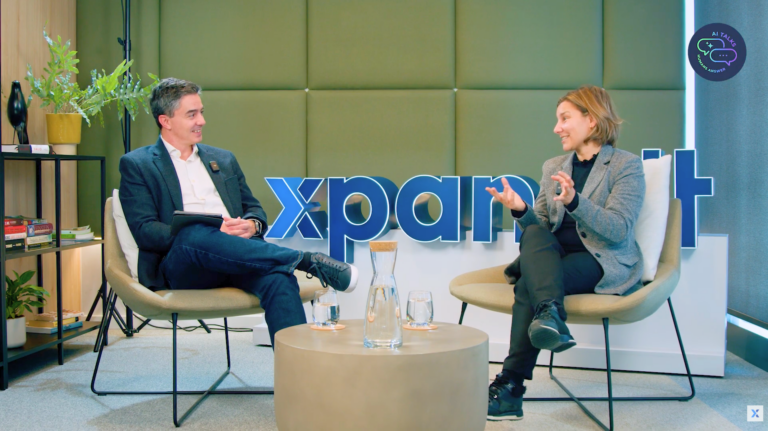
In the Media: Inês Lynce reflects on education in the age of AI on the “AI Talks, Humans Answer” podcast
Not prohibiting students matters — banning adults rarely works. That was one of the key ideas shared by Inês Lynce on the use of artificial intelligence and large language models in higher education, in the latest episode of Xpandit’s AI Talks, Humans Answer. At a time when universities are debating regulations and even prohibitions on the use of AI, Inês Lynce, INESC-ID researcher in artificial intelligence, President of the Board of Directors, and Professor at Instituto Superior Técnico, joins host Sérgio Viana (Xpandit) to reflect on how learning and teaching are changing in a world of increasingly ubiquitous AI models. The researcher reflects on how students can use these tools critically, and the evolving roles of teachers, curricula and student assessment. She also raises broader concerns about the social impact of AI, stressing the importance of human mentorship, curiosity and critical questioning as foundations of education, regardless of technology. Watch the full episode: here
read more › -
Big steps towards a smaller footprint: INESC-ID contributes to innovative carbon-management platform
Environmental requirements and regulations have been increasing in an effort to address the climate crisis, one of society’s main concerns in recent years. These goals, however urgent, can be challenging to meet.
read more › -
In the Media: André Duarte’s research revealing AI-memorised copyrighted content featured in The Register
The source of Large Language Models’ (LLM) knowledge is often unclear. Besides the fact that most commercial AI vendors do not disclose their full training datasets, current AI models are usually reluctant to reveal memorised content. Research by INESC-ID and Carnegie Mellon University (CMU) Portugal PhD student André Duarte's has recently been featured in an article in The Register, discussing this issue. The focus is a paper co-authored by André, “RECAP: Reproducing Copyrighted Data from LLMs Training with an Agentic Pipeline”, which describes a software agent, RECAP, that is more effective in coaxing memorised content from LLMs, helping to determine what texts were used to train them and if they are copyrighted. Throughout the article, André explains what makes RECAP different from other software with the same purpose, and states that although one focus of this research concerns copyrighted content, the broader goal is to understand how memorisation happens in LLMs. This development has the potential to address regulatory concerns and help clarify copyright infringement claims from AI model training. The authors of the paper, which also include INESC-ID researcher, Arlindo Oliveira, argue that concerns regarding whether AI is being trained on proprietary data highlight the need for tools that can find what AI models have memorised. Read the full article here.
read more ›